
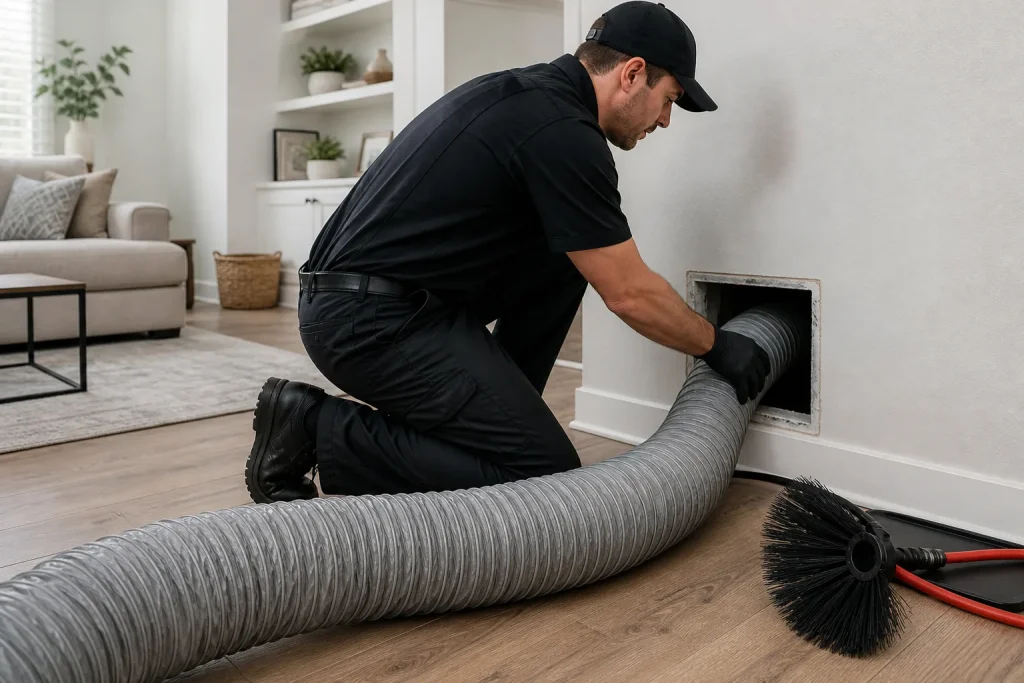
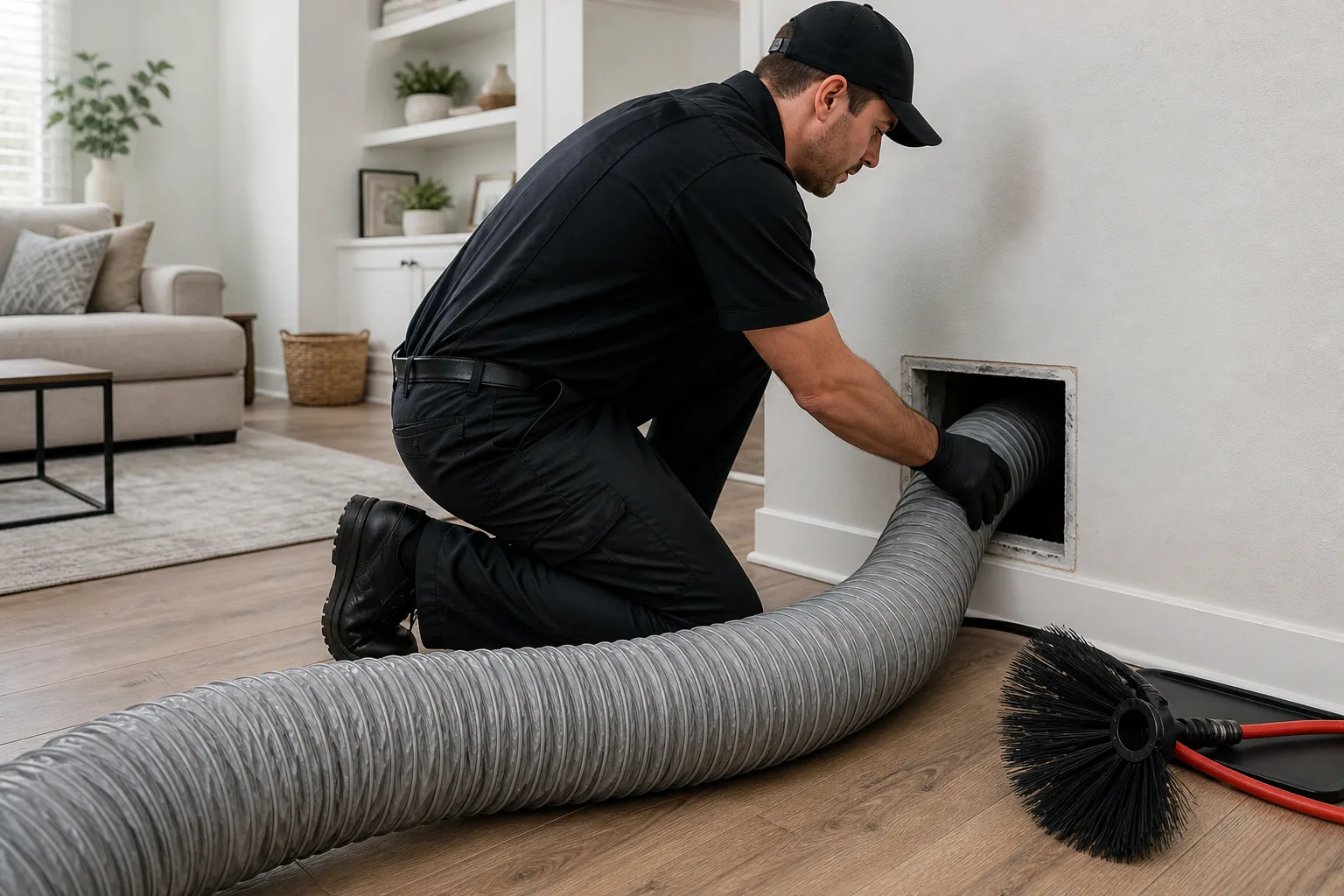
Abatement Technologies Air Duct Cleaning in Broomfield: A Homeowner’s Guide
Abatement Technologies didn’t design its negative air machines for routine dust removal. They were engineered for mold remediation and post-disaster restoration, which is exactly the right tool class when your duct system has had a serious contamination event. If your Broomfield home has been through a fire, a mold problem, or a major renovation, the equipment your duct cleaner brings matters more than most homeowners realize. If you’d rather have this handled than work through it alone, call (866) 947-8482.
Most homeowners compare duct cleaning quotes on price and never ask what machine shows up. That’s the gap this guide closes. We’ll explain what Abatement Technologies equipment actually is, when it’s the right tool for a Broomfield house, and how to tell whether the company you hire is using it correctly or just dropping the brand name into a website.
Key Takeaways
- Abatement Technologies negative air machines are built for contamination extraction, not light surface dust.
- The equipment class matters most after fire smoke, mold, or heavy construction dust, not on a routine yearly cleaning.
- Negative pressure has to be established before agitation starts, or the cleaning stirs up what it’s supposed to remove.
- HEPA filtration at the exhaust stage protects the crew and everyone in the house during the job.
- Asking about filtration rating, CFM capacity, and setup order separates real abatement work from a marketing claim.
What makes Abatement Technologies equipment different from a standard duct vacuum?
An Abatement Technologies negative air machine is a HEPA-rated, high-CFM air mover built to run under sustained containment loads, while a portable duct cleaning vacuum is built to move light dust through a hose. The difference shows up in filtration efficiency, airflow capacity, and how long the machine can run without losing its seal. In Broomfield homes with a real contamination history, that difference is the whole ballgame.
Consumer-grade portables and the machines some franchise operations use are often rated to capture larger particles and rely on a single filter stage. They do a job on everyday household dust. Abatement Technologies machines are designed for the environments where incomplete removal creates liability: mold remediation, restoration work after a fire, and controlled demolition. That engineering brief pushes toward finer filtration, better seals at the exhaust, and airflow measured in real CFM under filter load rather than on an open intake.
What that means for a Broomfield homeowner is fairly practical. A cleaner with this equipment class can pull a stronger, steadier vacuum through the whole duct system while capturing what it lifts. A consumer-grade machine tends to lose suction as the filter loads, which is exactly when fine particles are most likely to escape back into the room. We’ve seen the difference on systems where a previous cleaning left visible residue behind because the machine simply couldn’t hold vacuum long enough to finish the run.
One more distinction: Abatement Technologies is a brand most people associate with water damage and mold remediation contractors, not with routine duct cleaning. That crossover is the point. The protocols that come with the equipment are the same ones remediation crews use to keep contaminants from traveling through a building. Using that gear to clean ducts is a deliberate choice to treat the work as containment rather than sweeping.
When does a Broomfield home actually need this equipment class?
You need Abatement Technologies-class equipment when something has contaminated your duct system beyond ordinary dust: smoke residue after a fire, mold growth inside the ductwork or on the air handler, or a heavy load of fine construction dust from a renovation. A routine cleaning on a house with no contamination event is a different job, and a company that tells you otherwise is selling. In Broomfield, where plenty of homes sit near active construction and remodeling corridors, that distinction comes up more than you’d think.
The scenarios that call for this class of equipment are specific:
- Post-fire smoke. Smoke residue settles into duct lining and coil surfaces, and it keeps off-gassing after the fire is out. Pulling that material without containment just redistributes it through the house.
- Mold remediation. Where mold has been found or treated in the living space, spores can colonize duct interiors and the air handler. The ducts need to be cleaned under negative pressure so spores don’t migrate into clean rooms.
- Fine renovation dust. Drywall dust, sawdust from finish carpentry, and concrete dust from a basement or kitchen project travel further than most people expect. Household vacuums and standard portables can blow the finest fraction straight through their filters.
- Water damage recovery. A burst pipe or a slow leak into an air handler creates the damp conditions mold needs. That scenario is where Abatement Technologies equipment was born.
If your Broomfield home fits one of these, the question to ask isn’t whether the company cleans ducts. It’s whether they have the equipment class to do it without spreading the problem. Our technicians have up to 8 years of experience, and in that time the pattern has been clear: the homes with a contamination event need a different approach from the homes without one. air duct cleaning done on a contaminated system with the wrong machine does more harm than good.
How does containment setup work with Abatement Technologies equipment?
Containment setup means establishing negative pressure in the duct system before any agitation begins, so loosened contaminants are drawn toward the machine instead of into the living space. The correct order is: seal the openings, connect the negative air machine, verify static pressure, then start brushing and agitating. If a crew agitates first and connects the vacuum after, they’ve already released what they came to remove.
Here’s what that sequence looks like in practice, and what a homeowner should expect to see:
- Register sealing. Every supply and return register is covered or capped before the machine runs. This is what keeps dust from puffing out of a vent across the room while the main run is being cleaned.
- Machine connection at the main trunk or plenum. The negative air machine ties into the system at a controlled opening, not at a single register.
- Pressure verification. A technician should confirm the system is actually holding negative pressure before agitating. This is a measurement, not a guess.
- Agitation with the machine running. Brushing and air whips work against the flow, so what’s loosened gets pulled out rather than pushed around.
- Post-cleaning verification. A visual check of the duct interior, often with a camera, confirming the run is clean before the system is reassembled.
The reason this matters so much in Broomfield is that our climate runs dry most of the year, and dry air keeps fine particulate suspended longer than humid air does. A disturbed puff of drywall dust or soot in a low-humidity Broomfield house can drift through several rooms before it settles. Containment is what stops that drift from becoming the story of your afternoon. Clean the system under pressure, and the contaminants go into a filter instead of onto your furniture.
This is also why the finished-space protection piece matters. Our Guardsman-grade surface protection standards and drop protection are part of the same protocol: the finished areas stay covered, and the work zone stays separated from where you live. Contaminants contained, not just disturbed, is the entire principle.
What does HEPA filtration at the exhaust stage mean during the job?
HEPA filtration at the exhaust stage of an Abatement Technologies machine means the air leaving the machine is filtered to a fine level, so the cleaning process doesn’t put fine particulate back into the room. That matters most when someone in the house is immunocompromised, has asthma or allergies, or is a newborn or an older adult. It’s also the reason a well-run cleaning can happen while you’re home rather than requiring your family to leave.
Think about what a duct cleaning actually does. It agitates accumulated material and pulls it into a vacuum. If the vacuum exhaust is filtered well, that material ends up in the filter. If it isn’t, the finest particles, the ones that hang in the air and travel deepest into lungs, can pass through and recirculate into the same rooms the family is sitting in. Standard duct cleaning vacuums vary a lot here. Some have two or three filter stages; some have a single bag. Abatement Technologies machines in this class are engineered to hold HEPA-rated filtration through the whole job, not just at the start of it.
For a Broomfield household with a child with asthma or a family member going through cancer treatment, this is the detail to ask about up front. Our technicians have up to 8 years of experience, and that’s often where the conversation begins when a customer calls about a mold event or a recent renovation. The equipment isn’t a luxury on a contaminated system. It’s what makes the cleaning safe to run with the household in place.
Here’s the other side of it: exhaust filtration protects the crew, too. A cleaner working inside containment for hours is exposed to whatever is being pulled out. That’s part of why the remediation industry pushed this equipment class in the first place. Companies that buy into it tend to treat the work with more care across the board.
What should Broomfield homeowners ask to confirm the equipment is actually being used correctly?
Ask three specific questions: what filtration class the exhaust uses, what CFM capacity the machine is rated for, and whether negative pressure is verified before agitation begins. A company using Abatement Technologies equipment properly can answer all three without a pause. A company that only has the brand name on its website usually can’t.
The reason this questioning matters is the marketing problem. “We use HEPA filtration” is cheap to put on a website. Finding out what that phrase means in practice is where a Broomfield homeowner gains real leverage. Here’s the checklist worth running through before booking:
- Filtration class. Ask what the machine is rated to capture. If the answer is vague, that’s an answer.
- CFM rating. The stated airflow capacity under load tells you how the machine handles a real duct run. It should be given as a number.
- Containment sequence. Ask whether they establish negative pressure before agitating. Anyone who’s been trained on this equipment will describe the order clearly.
- Register sealing. Ask how they cover the registers. If the answer is “we don’t usually,” the containment piece isn’t real.
- Post-cleaning verification. Ask whether they photograph or video the duct interiors before and after. Before-and-after photos of your own ducts are the clearest proof the work happened.
One more thing worth asking: who on the crew is trained on the machine, and how long have they been running it. Our technicians have up to 8 years of experience, and that tenure shows up in how clean the setup stays from start to finish. If a company is cagey on any of these, keep calling.
While we’re on it, the occasional homeowner asks whether they can rent a machine at a big-box store and do this themselves. We’ve been asked that question enough to have a standard answer: no. Professional-grade equipment exists for a reason, and the containment discipline that goes with it isn’t something you learn from a rental counter. There’s a reason the rental aisle doesn’t have one of these.
When should you call a pro instead of handling this yourself?
Call a professional any time the duct system has had a contamination event, any time mold is suspected, and any time the work involves going beyond surface dust on the visible registers. Duct interiors, the air handler, and the coil surfaces are places a homeowner shouldn’t be working without the right containment and the right machine. The risk isn’t just that the cleaning won’t work. It’s that a partial job spreads the contamination.
We say this without any interest in scaring anyone. A lot of duct cleaning is genuinely routine. But when we get a call from a Broomfield homeowner after a renovation, a fire, or a mold inspection, the answer is almost always the same: this isn’t a job for a shop vac and a Saturday afternoon, especially since we’re closed on Saturdays anyway. Leave it to a company with the right equipment class and the documentation to prove the work was done.
If we’re doing the work, the price is one flat rate per system agreed before anything starts, and you get before-and-after photos of your own ducts. That’s the answer to the bait-and-switch problem that plagues this industry: a coupon price that balloons once the technician is on site. We don’t quote per-vent pricing, and we don’t hand you a teaser number. The written estimate sets the final price.
Related services in Broomfield: Beyond air duct cleaning, we handle dryer vent cleaning and HVAC cleaning, so a single visit can cover the full system rather than one piece of it. Ducking the second appointment is a welcome bonus.
The Bottom Line
Abatement Technologies equipment occupies a specific niche in duct cleaning. It’s built for contamination extraction in environments where incomplete removal creates liability, and it’s designed to hold HEPA-rated filtration while establishing negative pressure before agitation. That makes it the right tool class after a fire, mold event, water damage, or heavy renovation dust in a Broomfield home. For routine cleaning on a system with no contamination history, a basic professional-grade machine is plenty. For a Broomfield contamination event, it isn’t.
The best way to know which one you need is to ask a few direct questions of whoever you hire. What’s the equipment class? What’s the filtration rating? When does negative pressure get established? How is the work documented? A company that answers all of those without hesitation is one you can book.
We operate professional-grade Rotobrush and Nikro equipment, use Abatement Technologies containment protocols on every job, and work with Aprilaire and Honeywell air-quality products so cleaning and upgrades can happen in one visit. We also handle dryer vent cleaning and duct repair and sealing when we find leaks during cleaning. If you’re in Broomfield and need help, Broomfield Air Duct Cleaning offers free estimates. Call (866) 947-8482. We answer 24/7. Fast dispatch from 7am to 7pm, Sunday through Friday.
Frequently Asked Questions
Cost depends on the size of the system, the number of trunks and branches, and whether the system has visible contamination that needs containment. We don’t quote per-vent prices or teaser coupon figures, and we give one flat rate per system in the written estimate that’s agreed before work starts. That number sets the final price. Call (866) 947-8482 for an exact quote; estimates are free.
Cheaper quotes usually mean a consumer-grade portable vacuum, a single filter stage, and no containment setup. Those quotes often balloon once the technician is in the home, or the work turns out to be a brush-and-hose pass on the visible registers. If the quote doesn’t mention the equipment class and the filtration, ask before you book. Call (866) 947-8482 and we’ll walk you through what a real job includes.
Ask for before-and-after photos of your own duct interiors, not stock images from a website. A company using Abatement Technologies equipment properly will have a camera check as part of the job, and the photos are the documentation. If they can’t show you your own ducts, keep asking. Call (866) 947-8482 for a free estimate and we’ll explain what our documentation covers.
Most homes without a contamination event can go several years between cleanings, and some need it less. A house with pets, recent renovation, or a contamination event needs attention sooner, often right away. If you’ve had a fire, mold finding, or major remodel in your Broomfield home, don’t wait for the calendar to catch up. Call (866) 947-8482; estimates are free.
Written by the team at Broomfield Air Duct Cleaning.
Need Air Duct Cleaning Help?
Call Broomfield Air Duct Cleaning - the local pro we connect you with is licensed and insured, with free written estimates in Broomfield.
(866) 947-8482