
Last updated November 25, 2026
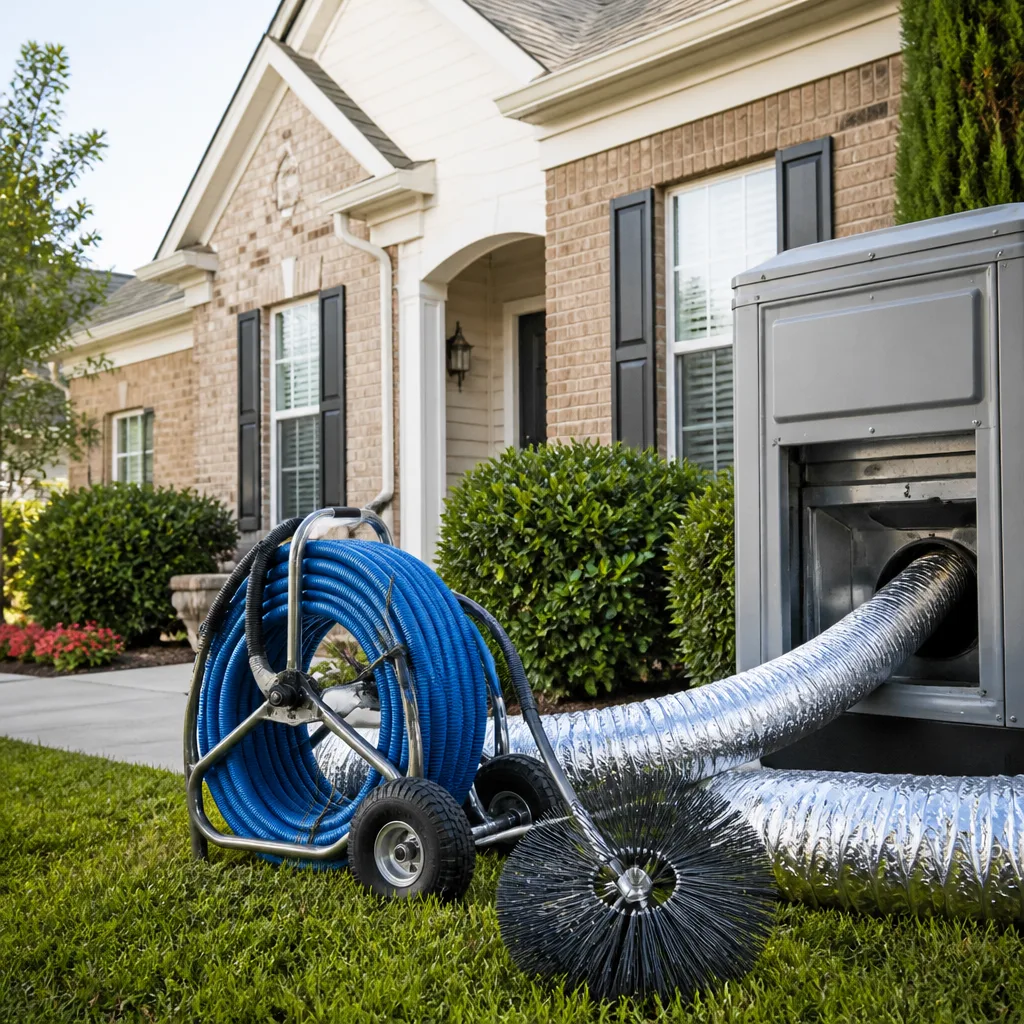 Whole-home duct cleaning
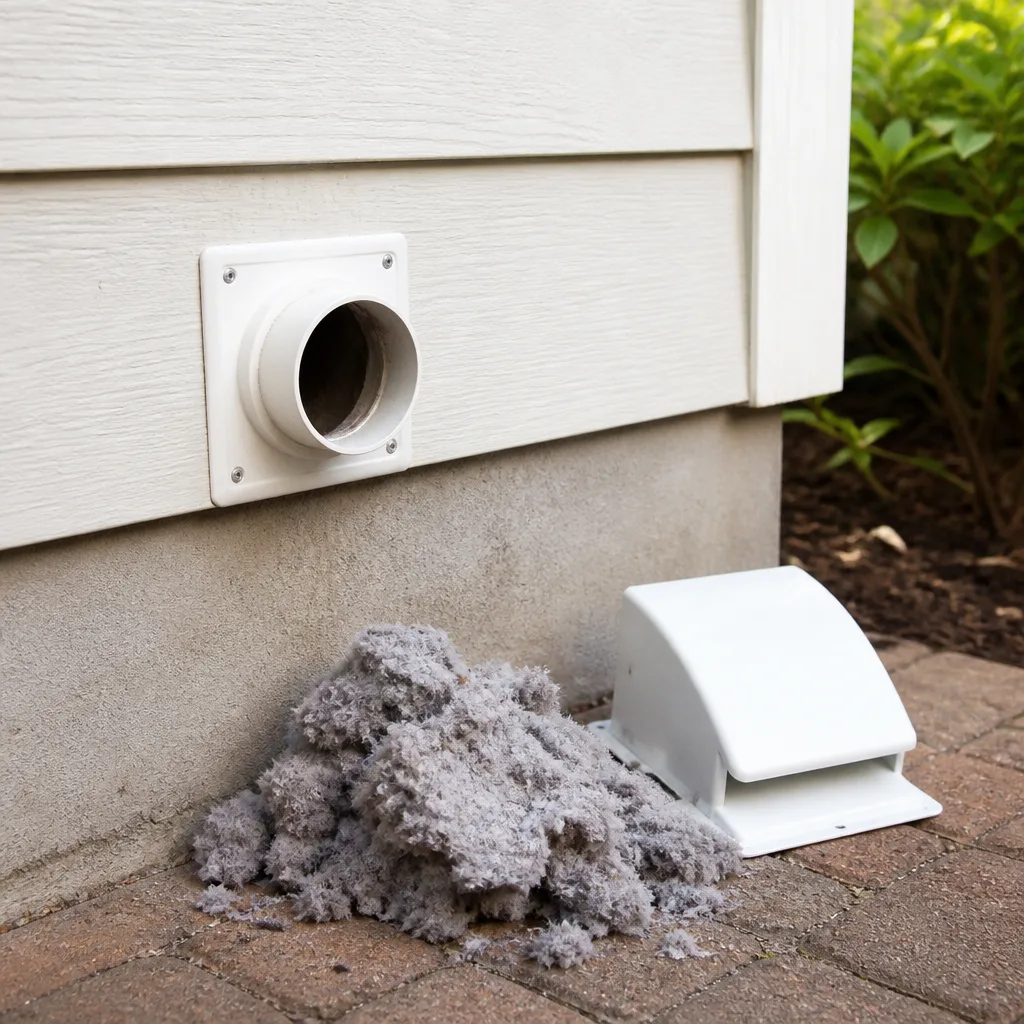 Dryer vent cleaning
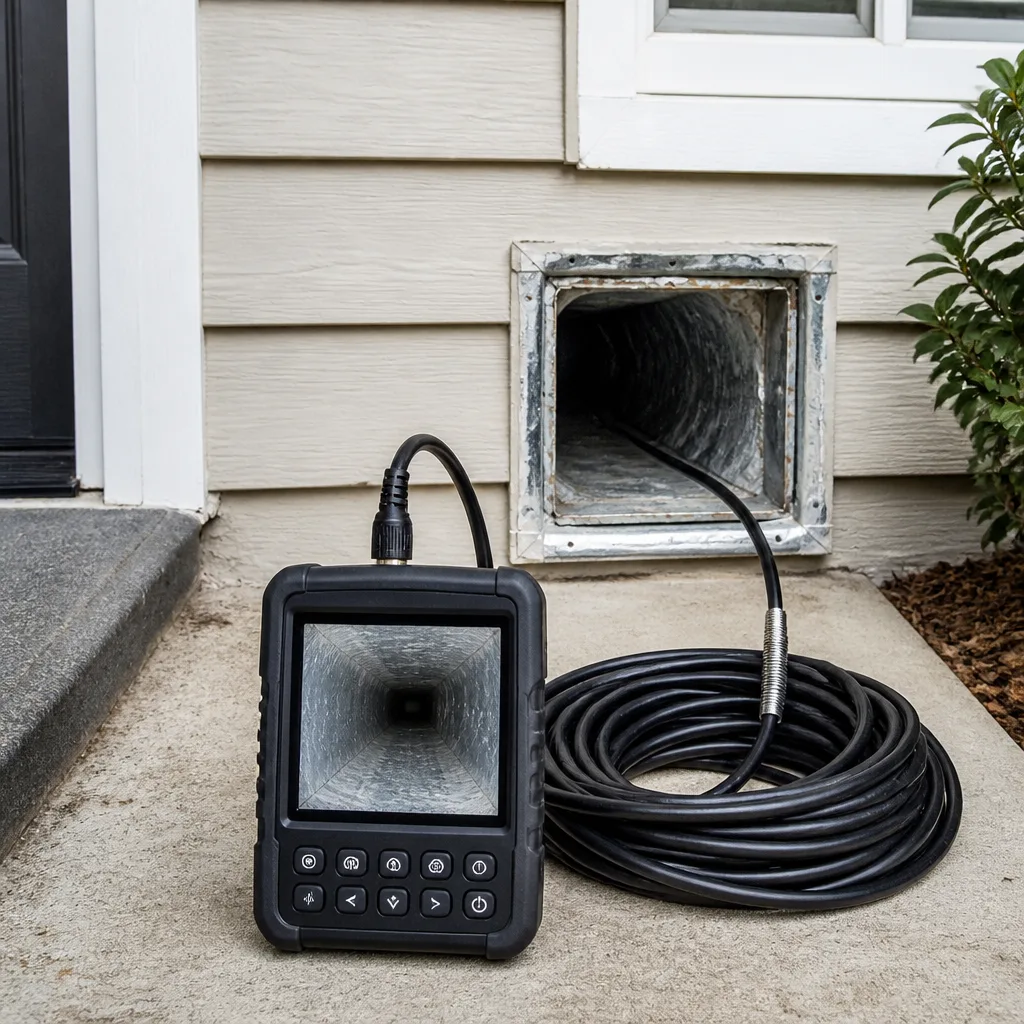 Camera inspection
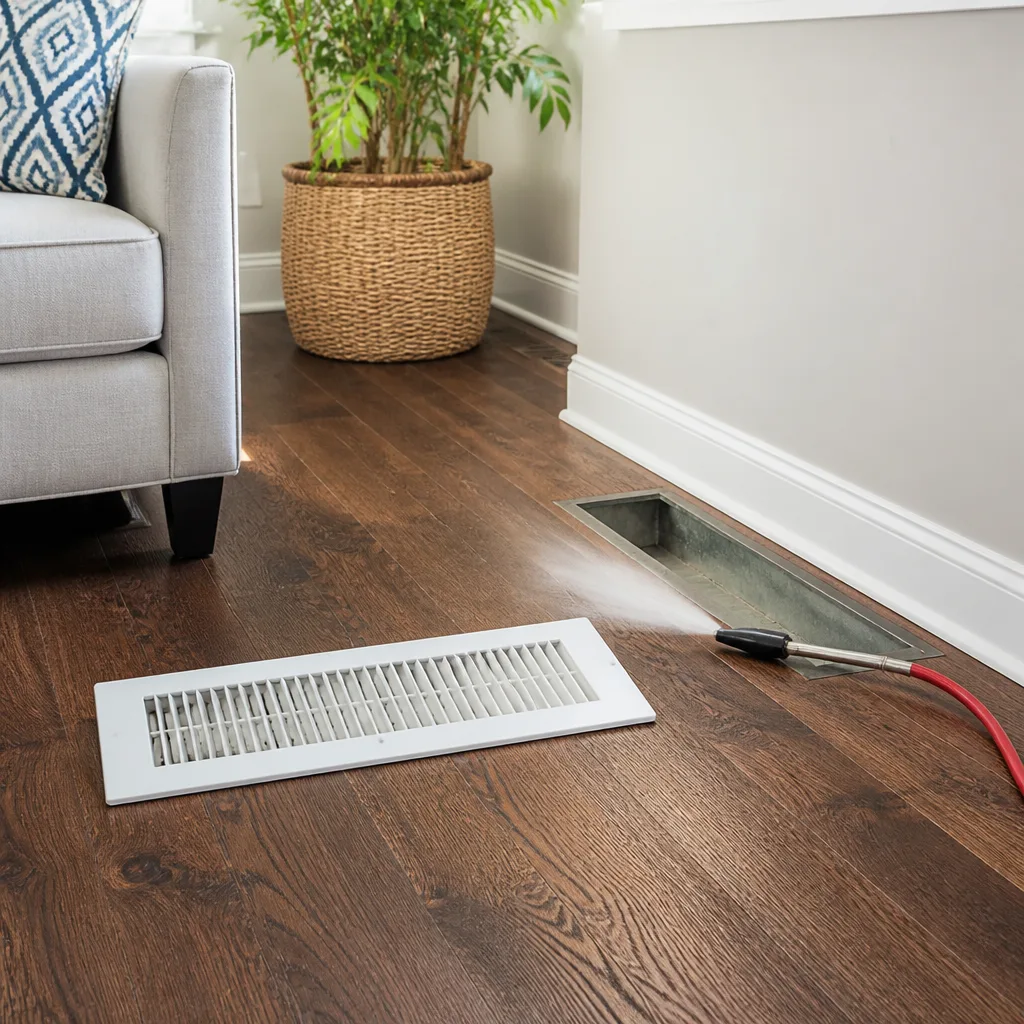 Sanitizing & deodorizing
Whole-system duct and dryer vent check with before-and-after photos - you see exactly what came out of your vents
That "$99 whole-house special" is a bait ad - the real number appears once they are in your hallway, or the "clean" is a shop-vac at the register. We photograph the inside of your ducts before and after instead.
Air Duct Cleaning Troubleshooting in Broomfield: Common Problems and How to Fix Them
If you’ve cleaned your vent covers three times this year and a gray film is back on them within weeks, the cover isn’t your problem. Dust that returns that fast is being pushed out from somewhere upstream – the supply trunk, a boot connection, or a run of flex duct you can’t see from the hallway. Most homeowners treat the register like the source when it’s really the exhaust point. That’s the core mistake this guide corrects. We want you to read the symptoms your system is already giving you – musty smells, cold rooms, dust trails, whistling grilles – the way a technician reads them, so you can tell a dirty-duct problem from a leak problem, a moisture problem from a debris problem, and know which ones you can handle yourself and which ones need professional negative-pressure extraction. We work on Broomfield systems every week and see the same handful of root causes over and over.
Quick Answer
Most recurring duct problems in Broomfield fall into three buckets: accumulated debris in the trunk and branch runs, air leaks at joints and boot connections, and moisture feeding biological growth on duct liner or the evaporator coil. Register cleaning and filter changes fix only the first, and only at the surface. If dust, odors, or uneven temperatures return within a few weeks, the source is upstream and needs a proper inspection, sealing, and full-system cleaning rather than another pass with a vacuum.
Styles & brands we work with
- Whole-home duct cleaning
- Dryer vent cleaning
- Camera inspection
- Sanitizing & deodorizing
Table of Contents
- Is it a dirty duct problem or a leaking duct problem?
- What does a persistent musty smell after cleaning actually mean?
- Why are some rooms in your Broomfield home always colder?
- Debris shedding from aging flex duct vs. contamination from outside
- What you can fix yourself and what you can’t
- A technician’s diagnostic walkthrough, step by step
- How to keep the problem from coming back
- When to call a professional
Is It a Dirty Duct Problem or a Leaking Duct Problem?
Dirty ducts and leaking ducts look almost identical from inside the house. Both produce dust on registers, both make rooms uncomfortable, both can raise your energy bill. The difference is where the air is going. A dirty system moves the right amount of air but carries more particulate with it. A leaking system loses conditioned air into unconditioned space – a crawlspace, attic, or wall cavity – before it ever reaches the room. That distinction decides whether cleaning alone will solve your problem or whether you also need duct repair and sealing.
You can check this yourself in about ten minutes with a simple airflow test at each register. Tape a square of light tissue paper over the grille and watch how it responds. A register with strong, steady pull or push across the whole face is likely well connected. A register where the tissue barely flutters, or where one side of the grille pulls hard and the other feels dead, points to a restriction or a disconnected run behind the wall.
Simple airflow checks you can run
- Turn the system fan to “on” so it runs continuously without heating or cooling.
- Hold a tissue at each supply register and note whether airflow feels strong, weak, or uneven across the face.
- Do the same at return grilles. A return that pulls hard usually means the supply side is restricted or leaking upstream.
- Walk the house and feel for air moving where it shouldn’t – around baseboards, at attic hatches, near recessed lights. That’s conditioned air escaping.
- Compare rooms. If one room is consistently weak and every other one feels fine, the problem is localized to that branch run, not the whole system.
In our experience across Broomfield homes, and especially in the older neighborhoods where ductwork has been retrofitted over the years, a system that passes the airflow test but still sheds dust is usually a cleaning problem. A system that fails it has a leak or a disconnected joint that needs to be found and sealed before any cleaning will hold.
What Does a Persistent Musty Smell After Cleaning Actually Mean?
A musty smell that survives a professional cleaning means the odor source wasn’t in the ducts – or wasn’t only in the ducts. Mold growth needs moisture, and moisture has to come from somewhere. Three culprits account for nearly every case we see: growth on the evaporator coil or in the drain pan, degraded duct liner, or moisture entering the system from a humid crawlspace or attic connection. Cleaning the sheet metal without addressing the moisture source just resets the clock.
How each cause is confirmed
- Drain pan or evaporator coil growth. The smell is strongest when the system first starts, then fades. That’s the coil and pan drying out. A technician confirms by opening the air handler and inspecting the coil face, pan, and drain line. Standing water or a slimy drain pan is the tell.
- Duct liner degradation. Older insulated flex duct or internally lined rigid duct can break down over time, and the exposed or crumbling liner holds moisture and odor. The smell tends to be constant rather than startup-only. It’s confirmed by pulling a section and looking at the liner condition; often the only fix is replacing that run.
- External moisture intrusion. The odor is intermittent and tied to weather or season. It’s confirmed by tracing the duct back to its source – an attic connection, a crawlspace run, or a joint near an exterior wall – and checking for condensation, water staining, or gaps.
If your home in Broomfield has a musty smell that returns within days of a cleaning, don’t schedule another cleaning. Schedule an inspection. Cleaning a duct system that has an active moisture problem is treating the symptom. The moisture source has to be identified and corrected first, then the system cleaned and, if needed, sanitized.
Why Are Some Rooms in Your Broomfield Home Always Colder?
Uneven room temperatures are the most misdiagnosed duct problem there is. Homeowners often assume the furnace or air conditioner is undersized, and sometimes that’s true. But more often the equipment is doing its job and the duct system is failing to deliver. A branch run that’s kinked, crushed, oversized, or leaking will starve one room while the rest of the house is comfortable. The fix is locating the restriction, not replacing the equipment.
Broomfield’s high-desert climate makes this easier to spot than in more humid parts of the country. Our summers swing from hot afternoons to cool nights, and our winters are cold and dry. A west-facing room with a long, poorly insulated run through the attic will feel the swing harder than a room with a short interior run. That’s not a quirk of the house; it’s a clue about which duct segment is struggling.
How to locate the restriction
- Map the problem. Note which rooms are consistently cold or hot and which are fine, and whether the issue is worse in summer, winter, or both.
- Trace the duct run to the problem room. If you can see it in an attic or basement, look for obvious kinks, sharp turns, crushed sections, or long unsupported spans.
- Check the register and boot. A partially closed damper, a register blocked by furniture, or a boot that’s separated from the floor can all cause the symptom.
- Feel for leaks along the accessible run. Warm or cold air escaping at a joint is a leak that needs sealing.
- If the run looks clean and connected but the room is still starved, the branch may be undersized or the system may need balancing. That’s a job for a professional with airflow measurement tools.
Duct repair and sealing is where this often ends. We’ve seen plenty of Broomfield homes where a single disconnected or crushed run, once sealed or replaced, resolved a room-temperature complaint that had been blamed on the HVAC unit for years. If you suspect the system is due for a full cleaning anyway, combining it with air duct cleaning and a leak inspection makes sense – you’re already paying for access.
Debris Shedding from Aging Flex Duct vs. Contamination from Outside
When you find debris on a register or in a supply boot, the instinct is to assume the ducts are dirty. Sometimes they are. But the type and location of the debris tells you more. Debris that’s uniform, fine, and appears at every register is usually accumulated dust and construction residue. Debris that’s concentrated near one run, chunky, or mixed with insulation fibers points to something else – either the duct liner is breaking down, or something got into the system from outside.
How to read the clues
- Uniform gray dust at every register: ordinary accumulation. Cleaning plus sealing and filtration is the answer.
- White or yellow fibrous material in one area: degrading duct liner, usually in older flex duct. That run needs replacement, not cleaning.
- Droppings, nesting material, or a smell that’s sharp rather than musty: pest intrusion. Animals find their way into attic ductwork in Broomfield just like anywhere else. This requires containment and sanitizing, not just a vacuum.
- Debris that returns quickly after cleaning in one room only: a leak or open joint near that room is pulling in outside air and whatever’s in it.
This is where professional containment matters. A vacuum that disturbs debris without containing it can spread the problem to other parts of the house. Our teams use Abatement Technologies containment protocols on every job so loosened material is captured, not recirculated into the rooms you’re trying to protect. It’s the same approach remediation contractors use, and it’s why the results hold.
What You Can Fix Yourself and What You Can’t
Not every duct problem needs a professional. Register cleaning, filter changes, and simple airflow checks are all things a careful homeowner can do. The line is where the work moves inside the duct system itself or involves contamination, moisture, or pest intrusion. At that point, the equipment and containment needed are beyond what a shop vac and a brush can deliver safely.
DIY-appropriate tasks
- Remove and wash supply and return register covers. Dry them completely before reinstalling.
- Replace the HVAC filter on schedule. A clogged filter starves the system and pushes dust back into the return.
- Check that registers aren’t blocked by furniture, rugs, or curtains.
- Vacuum the visible floor of a supply boot with a brush attachment – lightly, without pushing debris further into the run.
- Keep the air handler area clear and check that the condensate drain isn’t clogged.
Tasks that need professional equipment
- Cleaning the duct trunk and branch runs. Consumer vacuums and big-box rentals don’t produce the negative pressure needed to extract debris from a full system.
- Any work involving mold, moisture damage, or odor sources on the coil or liner.
- Pest contamination and sanitizing after animal intrusion.
- Duct repair and sealing at joints, boots, and disconnected runs.
- HVAC cleaning of the air handler, coil, and blower, which is where a big share of system contamination actually lives.
The honest rule: if the problem is visible and surface-level, it’s yours to handle. If it’s inside the system, involves moisture, or keeps coming back, it’s a professional job. That’s not a sales pitch; it’s how you avoid making a contamination problem worse.
A Technician’s Diagnostic Walkthrough, Step by Step
This is roughly how a proper diagnostic goes when we assess a system in Broomfield. It’s not a checklist you can fully run yourself, but understanding the sequence helps you describe symptoms clearly and evaluate whether a company is doing real work or just running a vacuum past your registers.
- Interview. We ask what you’re seeing, smelling, and feeling – and when. Return-time of dust, room-specific complaints, and whether the odor is startup-only or constant are the most useful facts.
- Airflow baseline. We measure airflow at supply and return registers to see which runs are strong, weak, or uneven.
- Access and inspection. We open access points at the air handler and at key branch runs, inspect the coil, blower, drain pan, and duct liner, and photograph what we find.
- Containment setup. Before any cleaning, we set up negative-pressure containment with Abatement Technologies equipment so loosened debris and contaminants stay captured.
- Source-specific cleaning. Using Rotobrush and Nikro equipment, we clean the trunk, branches, and boots, and treat the air handler and coil separately. Different contamination needs different tools.
- Leak identification. While the system is open, we find and note disconnected joints, crushed runs, and leaking boots.
- Sealing and repair. Where leaks are found, we seal or repair them on the spot so cleaned air stays where it belongs.
- Documentation. Before-and-after photos of your own ducts, so you can see what was done. No mystery, no “trust us.”
That last step matters more than it sounds. The biggest hesitation homeowners have about this industry is bait-and-switch – a coupon price that becomes a much larger invoice once the technician is on site. We work to a flat price per system agreed before work starts, with no per-vent pricing, and we document the work photographically. If you’re comparing quotes, ask each company whether they use containment, whether they inspect the coil, and whether they repair what they find. Broomfield homeowners deserve a straight answer, and the diagnostic walkthrough above is what a real one looks like.
How to Keep the Problem from Coming Back
Once you’ve cleaned the system and corrected the underlying issues, a few habits keep the results. The goal is to reduce the load on the system and eliminate the pathways that let contaminants back in.
- Change the filter on schedule. A clean filter is the single biggest lever you control. A clogged one forces air past gaps and pulls dust from every loose joint.
- Seal what you can reach. Foil tape at accessible joints and boots cuts leakage and keeps outside contaminants out.
- Keep the coil and drain pan dry and clean. Moisture is what feeds odor and growth. A clear drain line and a dry pan are the difference between a system that stays clean and one that doesn’t.
- Watch for pests. Screened vents and sealed exterior penetrations close off the entry points animals use.
- Address moisture at the source. If your crawlspace or attic is humid, ductwork running through it will pick up moisture. Controlling that humidity protects the ducts.
- Get a professional cleaning on a sensible interval. Most homes need it every few years, more often in homes with pets, recent renovations, or a history of moisture problems.
If you’d rather upgrade than just clean, there’s a straightforward option: modern air-quality equipment from Aprilaire and Honeywell – filtration and humidity control – can be added in the same visit as the cleaning, so you’re not scheduling a second contractor. It’s a way to solve the root cause instead of repeating the cleaning.
Common Mistakes to Avoid
- Treating register dust as the source. It’s almost always the exhaust point of a problem upstream. Clean the covers, but diagnose the trunk and branch runs.
- Scheduling cleaning for a moisture problem. If the system is musty, find and fix the moisture source before cleaning, or the smell will return.
- Choosing a company on coupon price alone. The cheapest quote often doesn’t include containment, coil inspection, or photography. Ask what’s actually included before you book.
- Blocking registers with furniture or rugs. Small change, real impact on airflow and balance, especially in rooms that already feel starved.
- Skipping filter changes. A clogged filter cuts airflow and pulls dust in through every gap. Set a reminder.
- Ignoring a crushed or disconnected run in a Broomfield attic or crawlspace. These runs are easy to miss and they starve a room silently. If one room is colder than the rest, check it.
- Cleaning without sealing. Cleaning a leaking system leaves the leaks in place. Seal what you find, or the dust and energy loss come right back.
See the difference
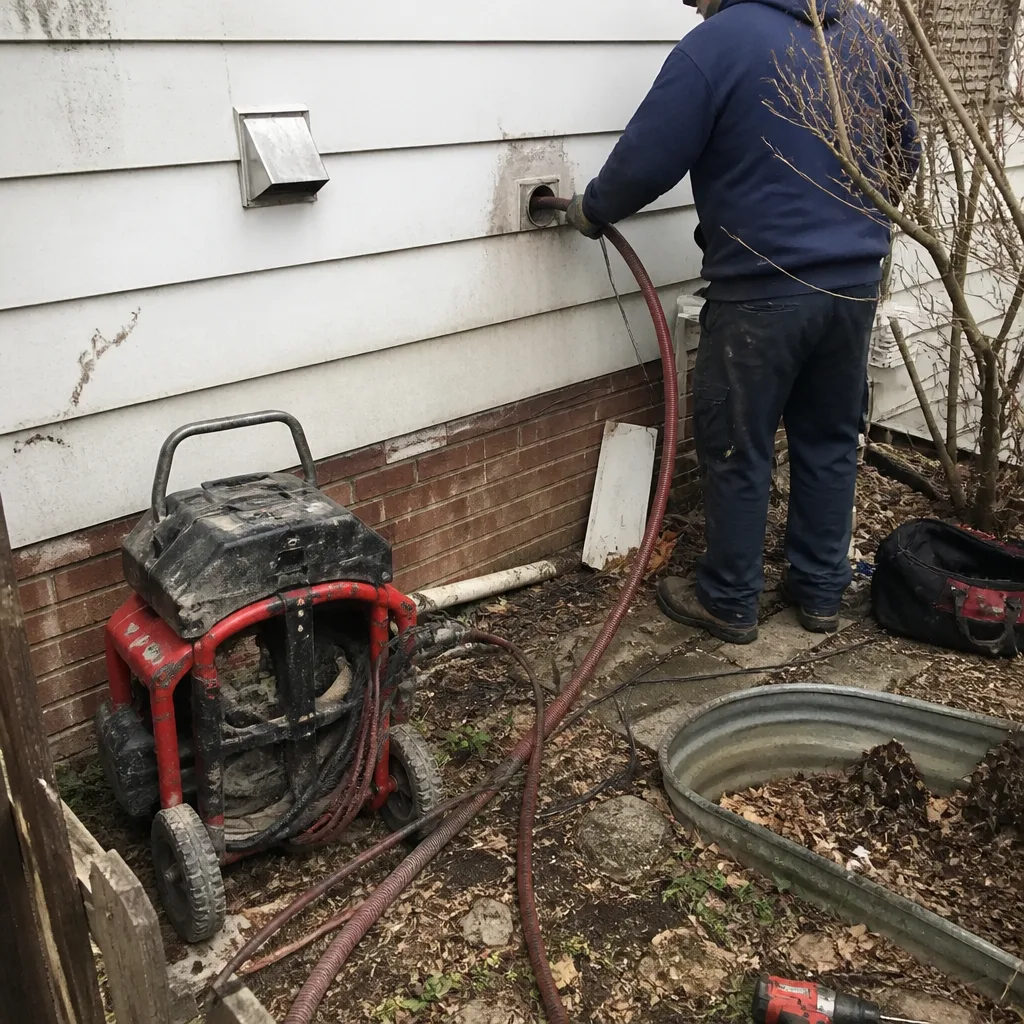 Before
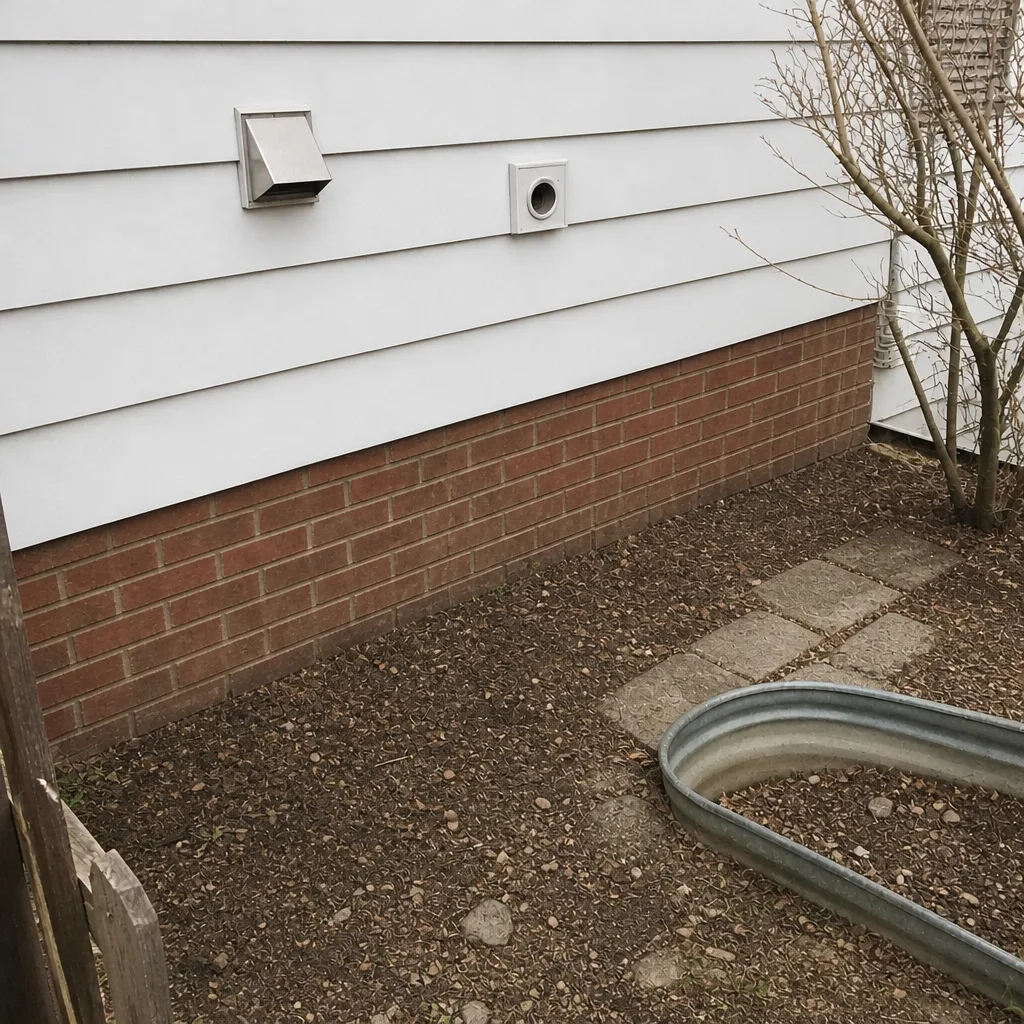 After
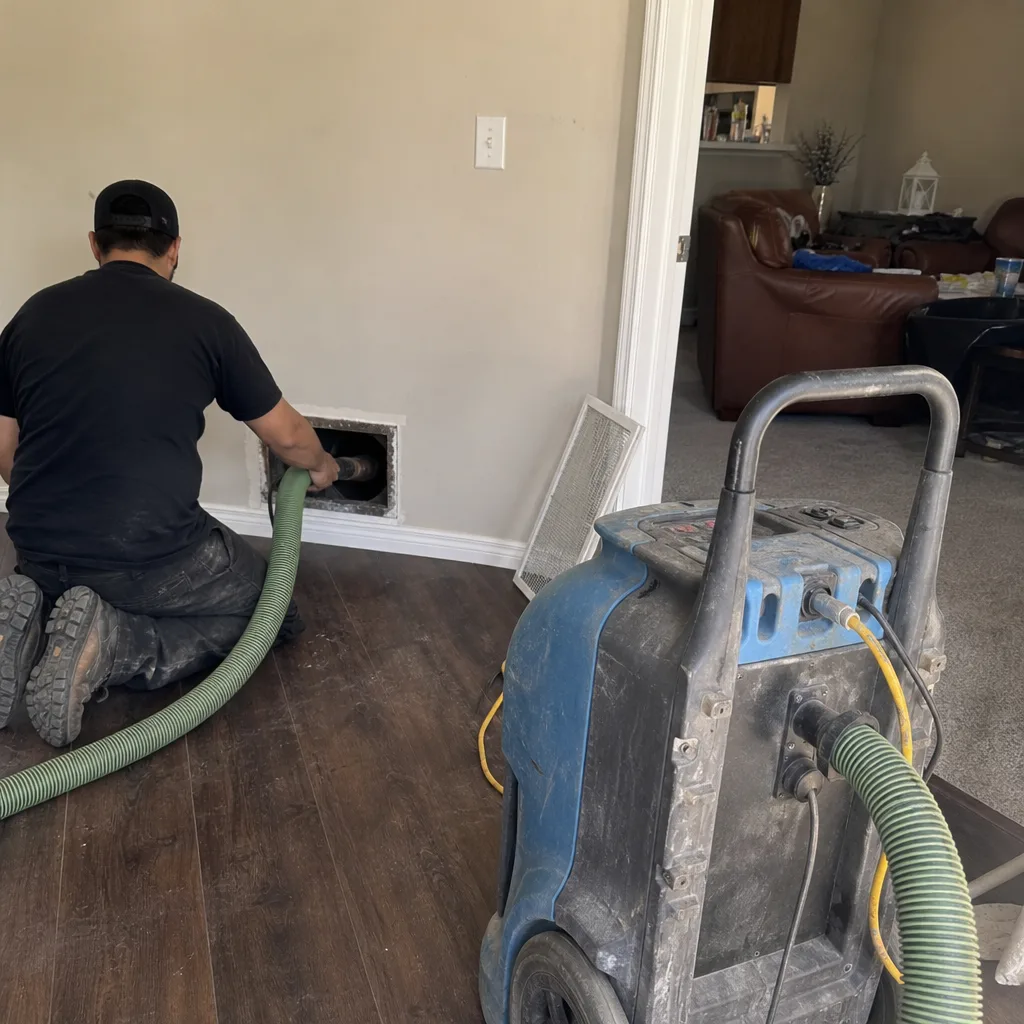 Before
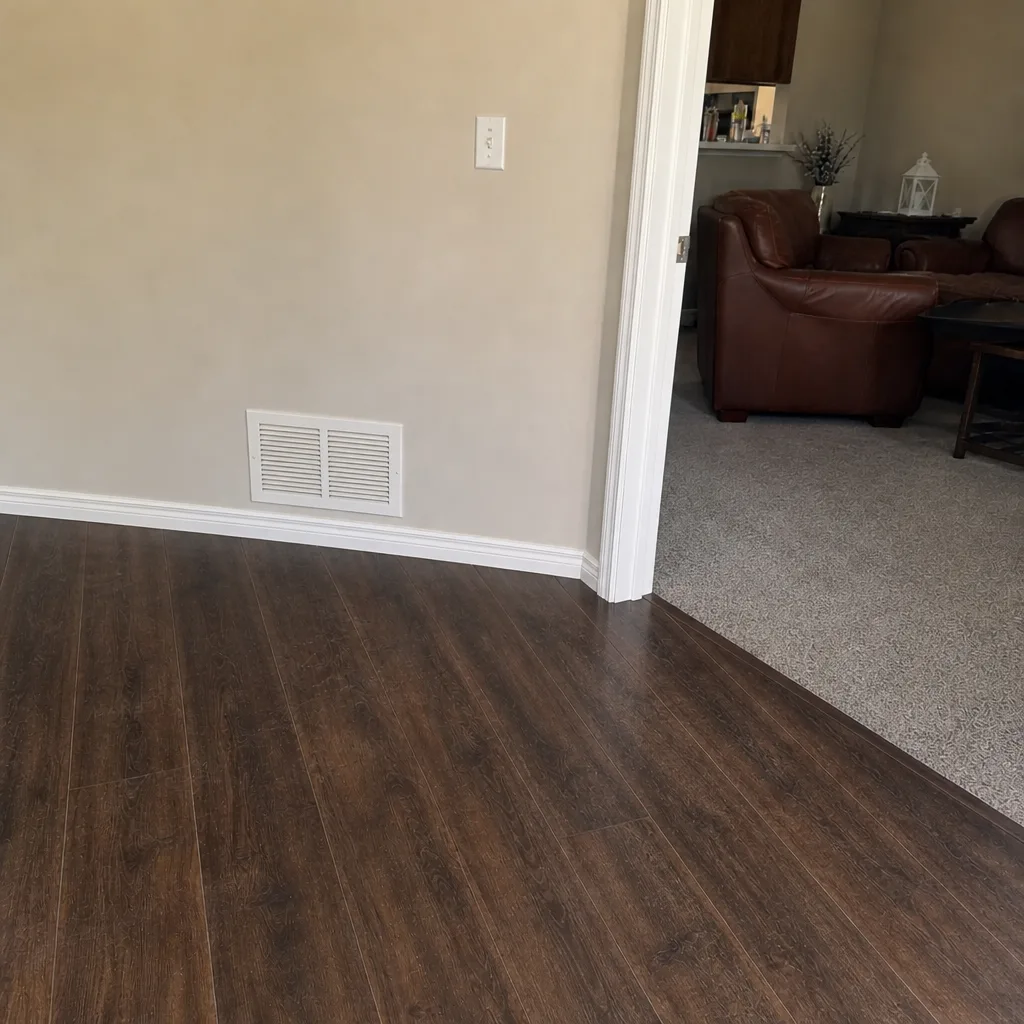 After
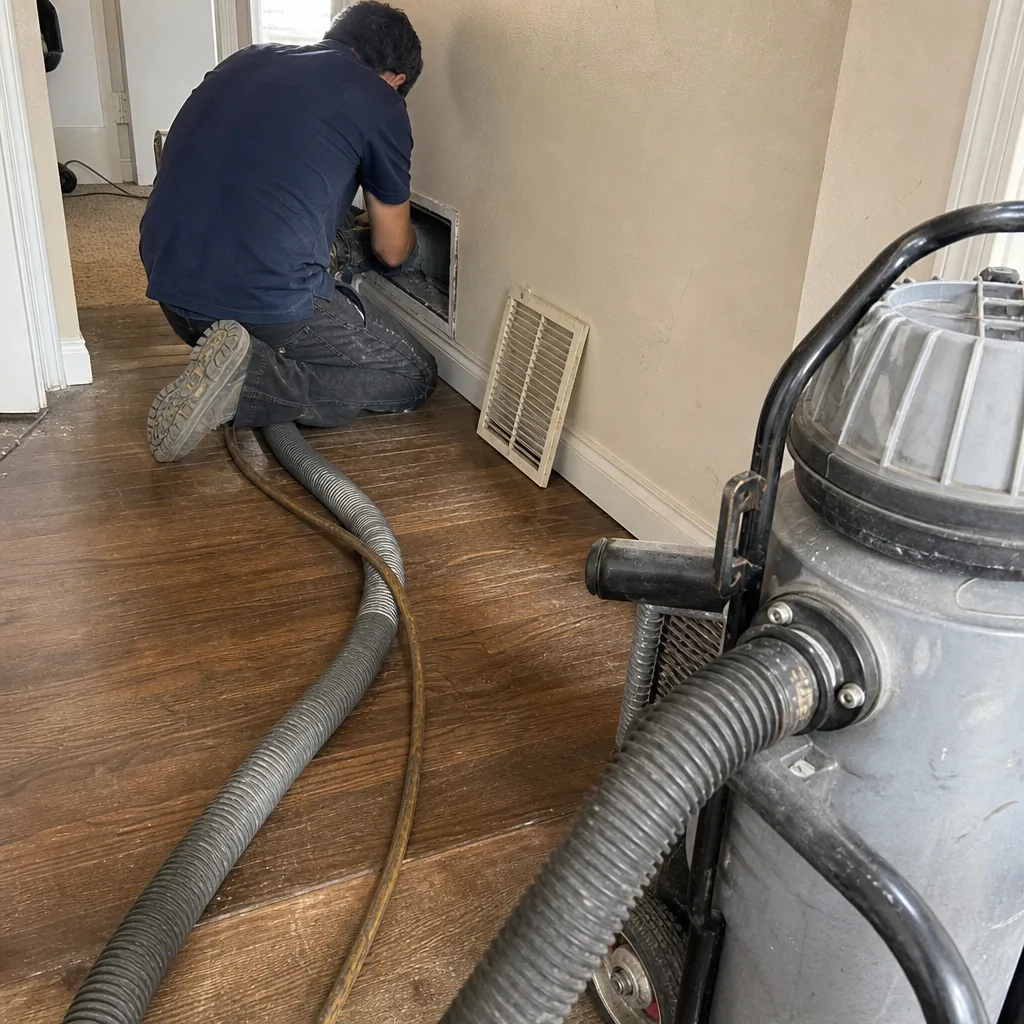 Before
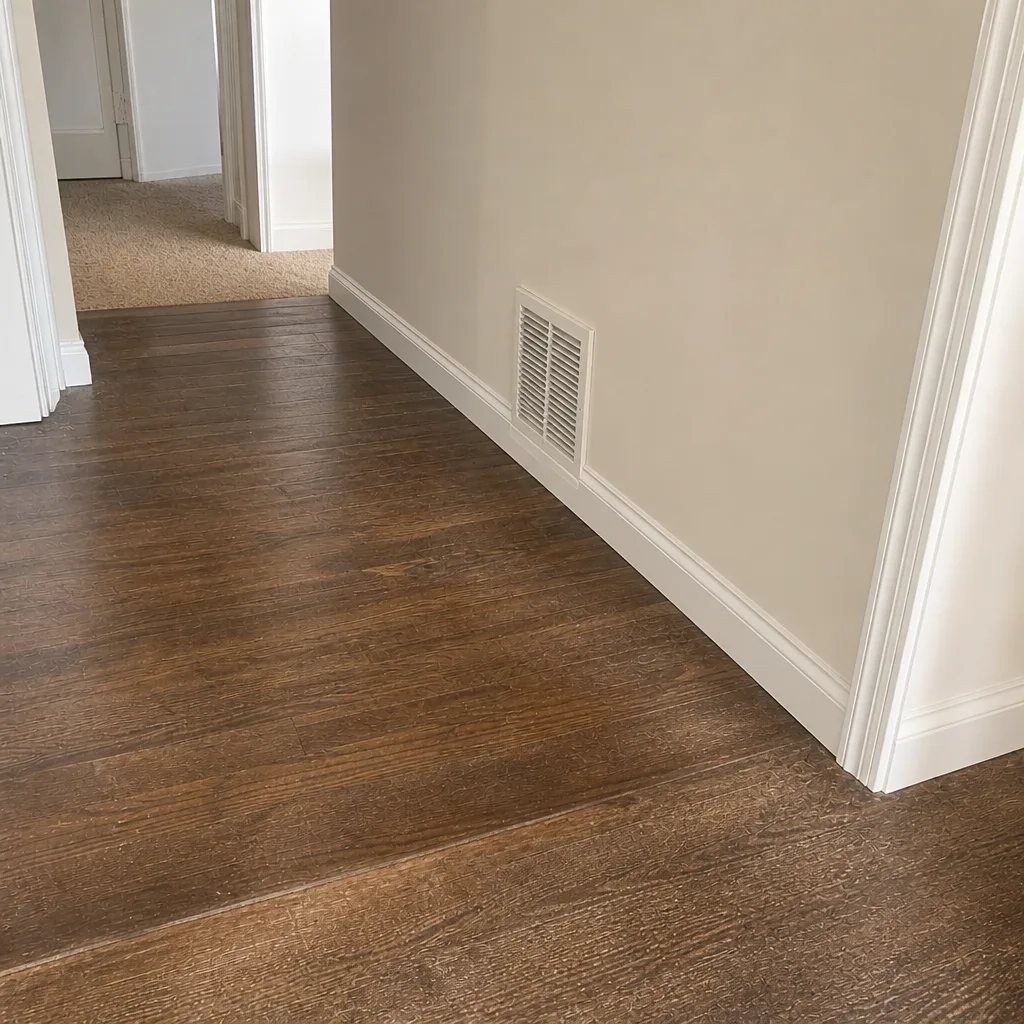 After
When to Call a Professional
Some problems stay small if you catch them early. Others get more expensive and more disruptive the longer they sit. Call a professional when the symptom is persistent, when it involves moisture or odor, when you find pest evidence, or when a room has been uncomfortable for more than a season and the obvious fixes haven’t helped. Also call before you renovate, when a system has been sitting unused for a long stretch, or when you’ve inherited a home with unknown duct history. For a full-system assessment including repair and sealing, our Broomfield Air Duct Cleaning team covers ducts, HVAC, dryer vents, and air quality in a single visit. If your dryer vent is also overdue, our dryer vent cleaning service runs on the same visit. Free estimates in Broomfield – call (866) 947-8482.
Frequently Asked Questions
Whole-system cleaning is priced per system, not per vent, and the written estimate sets the final price. We’ll look at your duct layout, how many systems and returns you have, and whether repair or sealing is needed, then give you a flat price before any work starts. Call (866) 947-8482 for an exact quote – estimates are free.
Cheap quotes usually skip work. Different companies use different equipment, may not run containment, may not inspect or clean the coil and air handler, and may not repair leaks they find. Before booking, ask whether containment is used, whether the coil is inspected, and whether before-and-after photos of your own ducts are provided. The price you get should include the work that actually solves the problem.
Ask for before-and-after photos of your own ducts and access points. Servicing a full system means opening it, cleaning it under containment, and documenting the result. Our containment protocols are designed so what’s loosened is captured, and the photos let you see the difference for yourself.
Most Broomfield homes need professional duct cleaning every few years, and more often if you have pets, have recently renovated, or have a history of moisture or pest problems. Between cleanings, filter changes and keeping registers clear do most of the work. If you’re unsure, a diagnostic walkthrough answers the question better than a general interval.
Cleaning and sealing the system removes a source of airborne debris, which can make a real difference, but it’s not a medical treatment. It’s one part of the picture. Filter quality, humidity control, and general home maintenance matter too. The Aprilaire and Honeywell equipment lines we work with help address those other pieces.
Yes, and older systems are often where the most useful findings turn up. Degraded flex duct, disconnected runs, and aging boots are common in homes that have been updated and added to over time. We diagnose first, then clean, repair, and seal so the system actually performs. Call (866) 947-8482 for a free estimate.
The Bottom Line
Most recurring duct problems in Broomfield aren’t random. They’re diagnosable. Dirty ducts show up as consistent dust on every register. Leaking ducts show up as weak airflow in specific rooms. Moisture problems show up as odor that comes back after cleaning. Debris from liner or pests has a different signature than ordinary dust. Once you can read the symptom, the fix becomes clear – and it’s almost always tied to the system, not the vent covers. If you’ve tried the surface fixes and the problem keeps returning, get a proper diagnostic. We’d be glad to help.
For a free estimate on cleaning, repair, sealing, or a full-system assessment, call Broomfield Air Duct Cleaning at (866) 947-8482. We answer 24/7. Fast dispatch from 7am to 7pm, Sunday through Friday, closed Saturday.
Written by the team at Broomfield Air Duct Cleaning.