
Last updated November 25, 2026
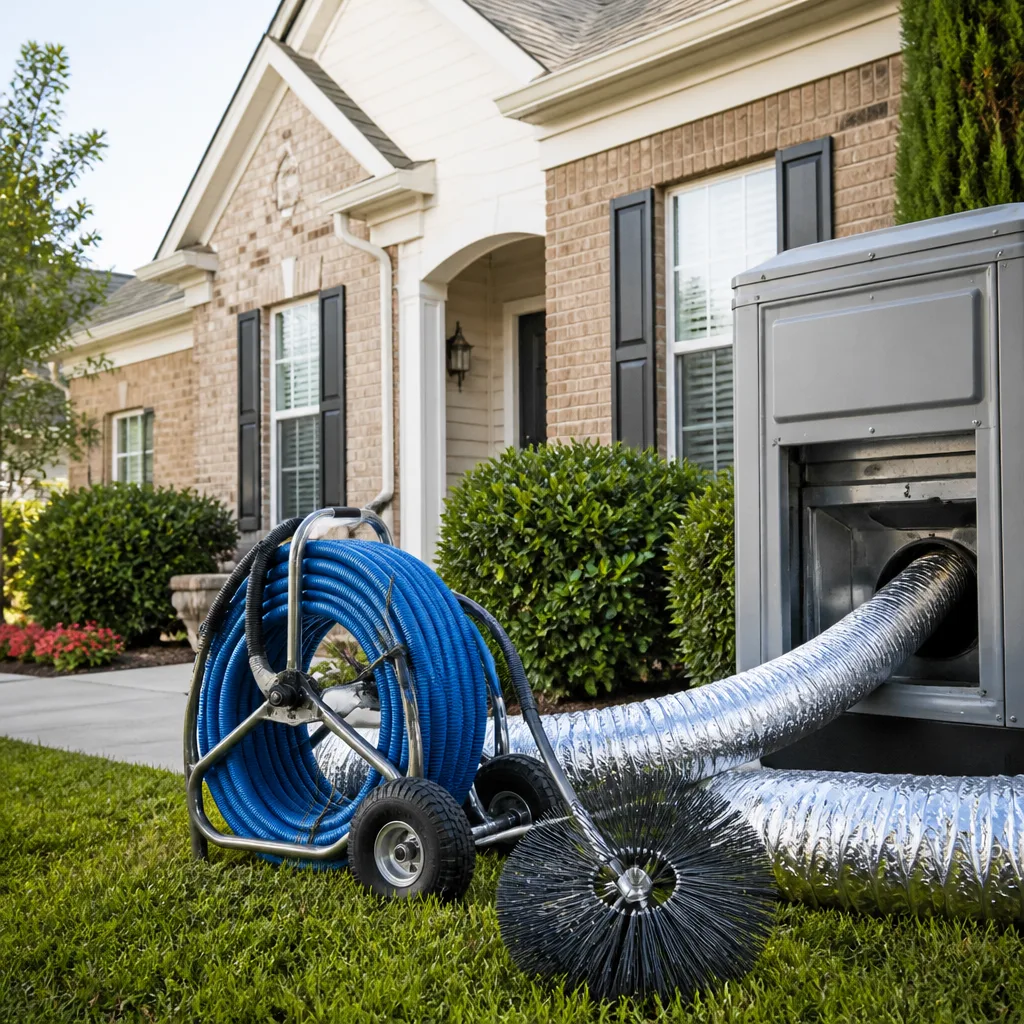 Whole-home duct cleaning
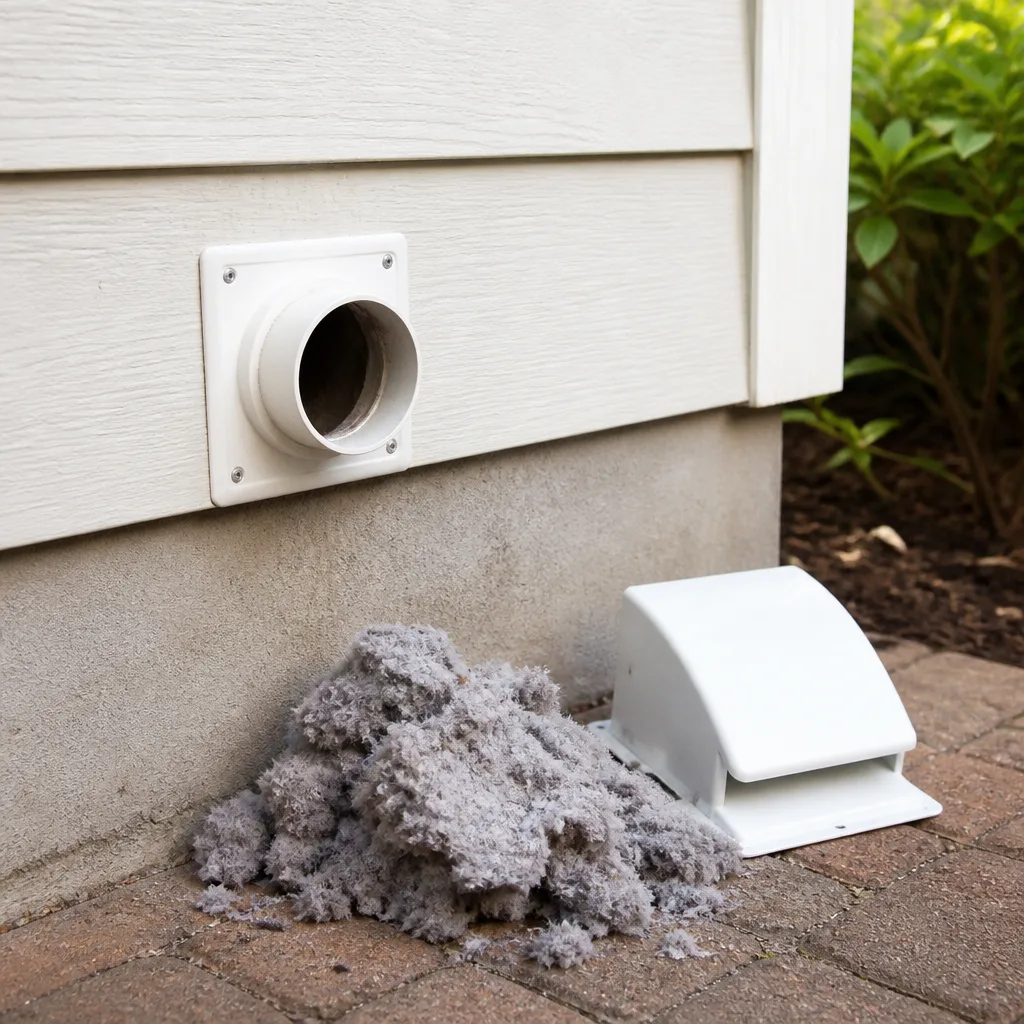 Dryer vent cleaning
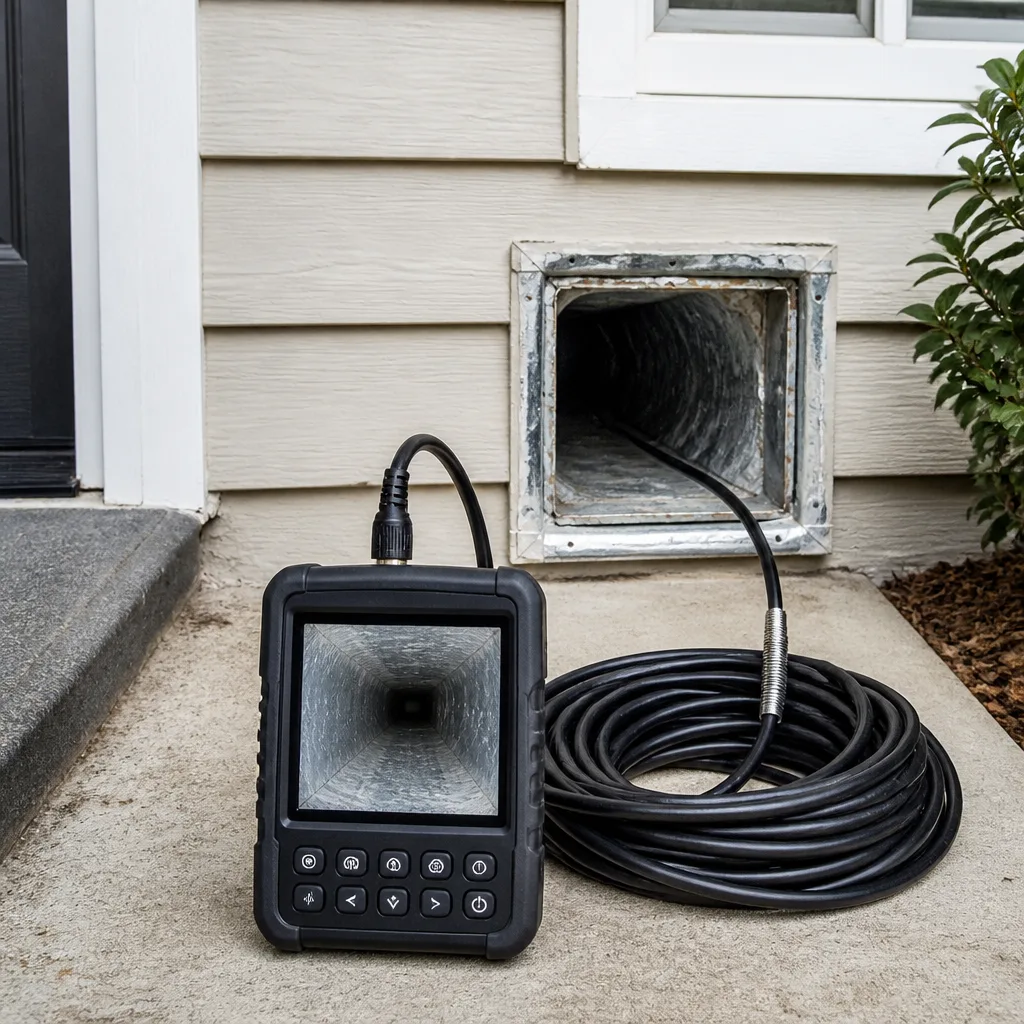 Camera inspection
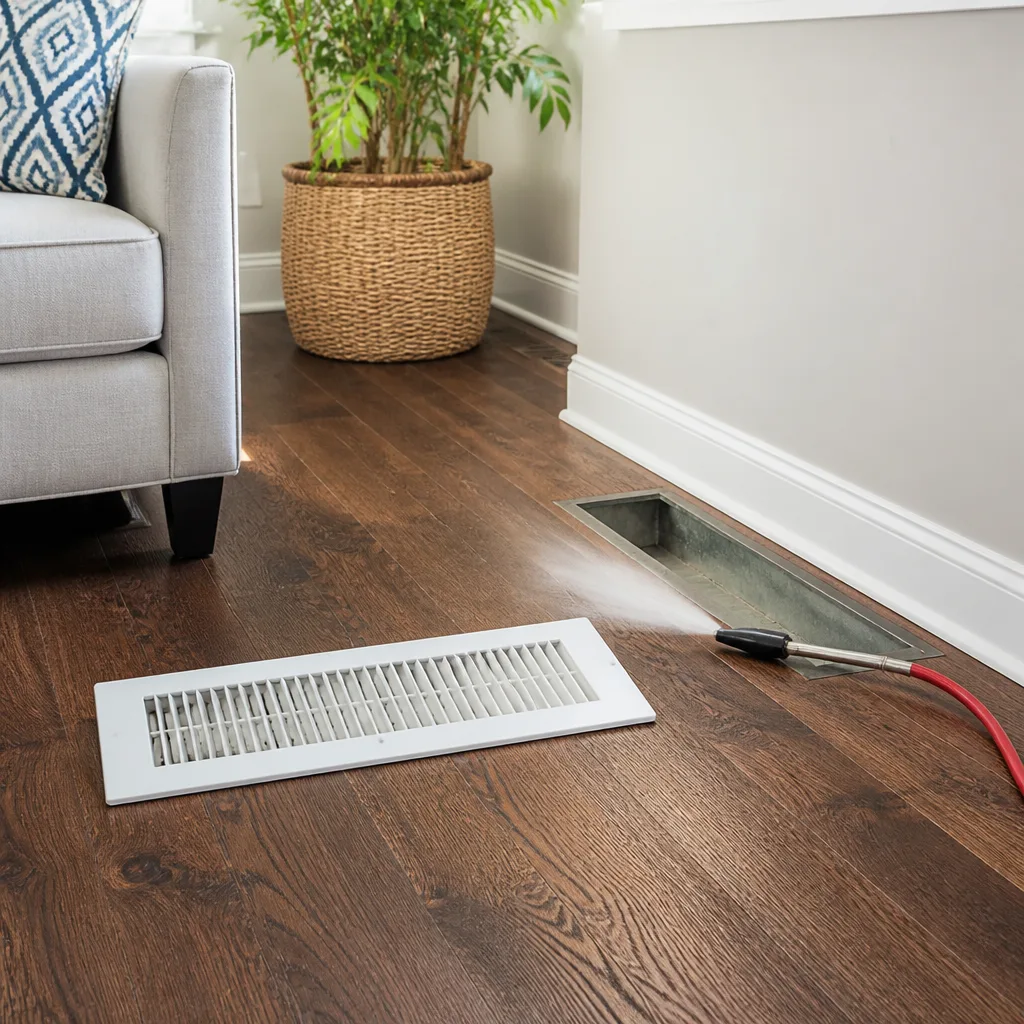 Sanitizing & deodorizing
Whole-system duct and dryer vent check with before-and-after photos - you see exactly what came out of your vents
That "$99 whole-house special" is a bait ad - the real number appears once they are in your hallway, or the "clean" is a shop-vac at the register. We photograph the inside of your ducts before and after instead.
Air Duct Cleaning Permits, Codes & Inspections in Broomfield, CO: What You Need to Know
Most homeowners assume that anything called “cleaning” needs no paperwork, and for a straight duct cleaning that’s true. The surprise comes later, when a technician offers to “tidy up a few leaks” or coat the inside of a duct with an antimicrobial product while the machines are still running. At that moment the job stops being maintenance and starts becoming a mechanical alteration, and in Colorado that shift is where permits, inspections, insurance and real estate disclosure all enter the picture. This guide walks through where the line sits in Broomfield, what each type of duct work actually triggers, and the exact questions to ask anyone who proposes sealing or lining your ductwork mid-clean.
Quick Answer
Cleaning your air ducts does not require a permit in Colorado, but modifying, sealing, rerouting or replacing duct components typically falls under mechanical code rules that local jurisdictions enforce through permits and inspections. In Broomfield, permit authority splits between the city and Boulder County depending on where the address sits, so confirming which department covers your home comes before any duct alteration starts. Duct sanitizing with an EPA-registered product is documentation, not permitting, so what you should ask for there is the product label and registration number, not a permit number.
Styles & brands we work with
- Whole-home duct cleaning
- Dryer vent cleaning
- Camera inspection
- Sanitizing & deodorizing
Table of Contents
- Cleaning vs. Modifying: Where the Line Sits
- What Colorado Mechanical Code Thresholds Mean for Duct Work
- The Broomfield Jurisdiction Split: City vs. County Permits
- Duct Sanitizing and EPA-Registered Product Documentation
- How Unpermitted Duct Modifications Affect Insurance and Disclosure
- Questions to Ask Before You Approve Duct Sealing or Lining
- What a Duct Inspection Actually Looks At
- The Paperwork Checklist for a Complete Duct Job
Cleaning vs. Modifying: Where the Line Sits
Cleaning removes debris from an existing system without changing it. Modifying changes the system itself. That’s the whole distinction, and it’s the one to hold onto when you’re standing in a hallway deciding whether to approve work a technician just proposed.
Here’s how the three common categories typically map out:
- Cleaning (brush and vacuum work inside ducts, registers, plenum and returns) generally doesn’t require a permit. This is maintenance, and it’s the core of what air duct cleaning covers.
- Sanitizing (applying an antimicrobial or sanitizing product inside duct surfaces) is a treatment, not a structural change. It usually doesn’t require a permit, but it does mean EPA-registered product documentation should change hands.
- Sealing, routing changes, liner replacement or new connections touch the mechanical system itself. These can cross into permitted work, and the threshold usually depends on scope: sealing a joint in an accessible duct run is different from rerouting a trunk line or replacing a flexible duct section that feeds a room.
When we clean a system, our technicians have up to 8 years of experience and know exactly where cleaning ends. The honest answer for most Broomfield homes is that a cleaning plus minor joint sealing sits in a gray zone: the work is worth doing, and pulling a permit for it may or may not be required. The thing to avoid is finding out later, during a home sale, that nobody decided and nobody documented. Our recommendation is simple: if the scope of work goes beyond cleaning and treating, ask the contractor to tell you, in writing, whether a permit applies. Call (866) 947-8482 to talk through what your specific job involves.
What Colorado Mechanical Code Thresholds Mean for Duct Work
Colorado communities typically adopt a mechanical code based on national model language, and those codes govern duct alterations far more than most homeowners realize. Cleaning isn’t a code event. Altering, sealing, replacing or extending ductwork usually is, at least once the scope gets past routine maintenance.
How the thresholds usually break out in practice
- Pure cleaning and debris removal: no permit in nearly every jurisdiction, and no inspection. This is the vast majority of duct work Broomfield homeowners ever need.
- Product-based sanitizing: no permit, but the product should be EPA-registered and its label should be available on request.
- Small-scale joint or seam sealing: commonly treated as maintenance, though it depends on how the duct was originally constructed and how much has to be opened up to reach the leak.
- Duct relocation, extension, liner or substantial replacement: most commonly requires a permit and a follow-up inspection, because the change affects the mechanical system’s performance and its connection to the HVAC unit.
What matters more than memorizing code sections is recognizing the pattern: if the work changes the physical duct system, assume a permit may apply and ask your jurisdiction to confirm before the technician starts. That one phone call to the building department settles the question every time. Never let anyone talk you past that step with vague reassurance that “it’s just cleaning.”
The same logic runs through related work. When we perform HVAC cleaning, we’re cleaning the air handler, coil and cabinet as-is. When we perform dryer vent cleaning, we’re removing lint accumulation from an existing vent run. Neither alters the mechanical system, and neither should trigger a permit. The moment duct runs themselves change shape, destination or material, that calculation shifts.
The Broomfield Jurisdiction Split: City vs. County Permits
Broomfield is one of the more unusual permit jurisdictions in Colorado because the city and county are consolidated into a single government, and depending on where your home sits, permit authority can look different from street to street. Before applying for any permitted duct work, the first step is confirming which department covers your address.
How to confirm your permit authority in Broomfield
- Look up your address on the city and county permit portal, or call the building department directly with the address in hand.
- Note whether your property falls inside city limits or an unincorporated area. The consolidated structure means one government, but permit process and inspector assignment still route by address.
- Ask for the specific code edition being enforced for your property. This matters because mechanical code editions change, and knowing which version governs your job tells the contractor exactly what standard to build to.
- Get the answer in writing (an email confirmation is enough) so you have documentation if the question ever comes up during a sale or a claim.
Broomfield also sits in a climate that puts real strain on duct systems. Cold winters and dry summer air create pressure and temperature swings that work seams and joints harder than they’d be worked in a milder climate, which is part of why duct sealing gets proposed so often here. Neighboring communities along the US-36 corridor and out toward the airport share the same climate, and the same pattern of duct leak discovery during cleaning shows up across all of them. If you’re in a nearby city, the city portal for Broomfield Air Duct Cleaning is a reasonable place to start for service, and the permit question for your address still goes to your local building department either way.
Duct Sanitizing and EPA-Registered Product Documentation
Duct sanitizing is the point where many homeowners get confused about what “regulatory” means. It doesn’t require a permit. What it does require, ethically and often contractually, is that the product used is EPA-registered and that the label is available for inspection.
Here’s what to request before any sanitizing treatment is applied to the inside of your ducts:
- The product label and EPA registration number. Any legitimate antimicrobial product carries both, and the label will list exactly where and how it may be applied.
- The intended application method and the surfaces it will contact. Some products are intended for hard interior duct surfaces and not for flexible duct or for the air handler itself.
- The safety data sheet if anyone in the household has respiratory sensitivity.
- Confirmation the ducts have been cleaned first. Applying a treatment to a dirty duct defeats the purpose and is against the direction of most product labels.
In our practice, sanitizing is something we treat as a deliberate option, not a default step. We use Abatement Technologies containment equipment during the job so that loosened contaminants don’t recirculate into living space while the system is opened up. If a technician offers sanitizing without discussing the product or its label, that’s a signal to ask harder questions. If they offer it as part of a package without asking whether you want it, that’s a different signal.
How Unpermitted Duct Modifications Affect Insurance and Disclosure
Unpermitted mechanical work can become a disclosure obligation in Colorado real estate transactions, because sellers are typically required to disclose known problems and known unpermitted work. A duct modification done without a permit can surface during a buyer’s inspection and stall or renegotiate a sale.
On the insurance side, the concern is claim defensibility. If a homeowner’s insurance claim involves an HVAC system that failed and the insurer discovers ductwork was modified without a permit or inspection, coverage questions can follow. That doesn’t mean claims get denied automatically, and it certainly doesn’t mean every duct sealing job is a red flag. It means documentation matters.
Here’s the practical takeaway for anyone who’s had duct modification work done without paperwork:
- Request a written scope from the contractor who performed the work, with dates and a description of what was sealed, replaced or rerouted.
- If a permit could have applied, follow up with your building department about whether the work needs to be inspected retroactively.
- Keep photos of the before-and-after of any duct alteration, ideally with manufacturer labeling visible on new materials.
- Disclose accurately if you sell, and avoid the temptation to describe a modification as “just cleaning” when it was more than that.
We document every job we perform with before-and-after photos because we know that in Colorado these records carry weight long after the work is finished. Call (866) 947-8482 if you’re unsure what documentation you should be asking for on an upcoming job.
Questions to Ask Before You Approve Duct Sealing or Lining
Duct sealing is one of the most commonly upsold additions to a cleaning job, and it’s also one of the most often done without proper scope discussion. Whether you’re working with us or anyone else, these questions sort the competent from the opportunistic.
- “Which specific ducts are leaking, and how do you know?” A competent technician can show you where they’ve identified leaks and how they’ve verified them. If nobody can point to a location, the proposal is a guess.
- “What sealing method are you using, and does it work on my duct type?” Flexible duct, rigid sheet metal and ductboard each seal differently. Ask what material is going on and what product brand.
- “Does this work require a permit under the code edition Broomfield enforces?” Ask them to answer yes, no, or “let’s confirm with the building department.” Anyone who can’t give you one of those three is not paying attention.
- “Will you be working inside my living space, and how are you containing the debris?” Containment matters because ductwork is designed to move air, not hold it during cleaning. A contractor without proper containment equipment will spread dust around your home.
- “What documentation will I get when the job is done?” Before-and-after photos, a written scope of work, product labels for any coatings or sealants. If the answer is “we’ll send it later,” plan on not receiving it.
- “Will the leak be repaired before or after the cleaning?” Repairs should be identified during cleaning and corrected as part of the same job, which is what we mean when we say we fix what we find.
- “Does my current air quality equipment (filtration, humidification) still work after the sealing?” If you have Aprilaire or Honeywell air-quality products installed, sealing shouldn’t interfere with them, and a good contractor will check.
None of these questions are hard. They’re the questions any detail-oriented homeowner should ask before authorizing more than a cleaning. A contractor who welcomes them is worth hiring. A contractor who gets irritated by them is telling you something.
What a Duct Inspection Actually Looks At
When you hear “duct inspection,” two different things can be meant. One is the inspection a building department conducts when permitted work has been performed. The other is the inspection a cleaning company performs as part of the job. They’re related but not the same, and neither one is a code enforcement action against a homeowner.
Building department inspection
If a permit was pulled for duct modification, an inspector from the issuing jurisdiction typically reviews the work against the permitted scope. Access points, sealing methods, material labeling, and the connection to the HVAC unit are the usual focus. The homeowner’s role is mostly to have the documentation available and to confirm the final inspection sign-off is recorded with the department.
Cleaning company inspection
When we clean a system, we inspect the accessible duct interior, the registers, the plenum, the return trunks, and the air handler as we go. What we’re looking for: accumulated debris, disconnected or crushed flexible duct sections, joint failures, and evidence of moisture or pests. These are the things an inspection finds that a homeowner can’t see from any register in the house.
In Broomfield’s climate, joints are more likely to show stress than they would in a more stable environment, because the system cycles between heating and cooling across the year and the pressure swings work those seams. If you’re seeing cold spots in one room, higher energy bills, or dust settling on surfaces shortly after you clean them, those are the symptoms that point to a duct inspection being worthwhile. Call (866) 947-8482 to schedule one – estimates are free.
The Paperwork Checklist for a Complete Duct Job
If you’ve read this far, you’ve got what you need to make the call on whether a permit applies to your job. Here’s what to have on file when the work is done, whether or not a permit was required.
- Written scope of work listing every task performed, with dates
- Before-and-after photos of the duct interior, plenum and air handler
- Product labels for any sanitizing treatment or duct sealant used
- Permit number and inspection sign-off if a permit applied
- Equipment record noting which cleaning system was used on the job (Rotobrush and Nikro are the two professional-grade systems worth recognizing)
- Confirmation of containment method used during the job
None of this is administrative busywork. In Colorado, documentation is what separates a clean sale of your home later from an expensive renegotiation. It’s also the difference between an insurer approving a claim quickly and asking for records you don’t have. For a broader walkthrough of what duct cleaning involves, our overview page covers the process end to end.
Common Mistakes to Avoid
- Approving duct sealing mid-clean without asking who’s permitting it. The moment duct work moves from cleaning to sealing or modification, the permit question needs to be settled before work starts, not after.
- Assuming every part of Broomfield runs through the same permit desk. Consolidated city-county government doesn’t mean uniform process; confirm your address routes where you think it does.
- Accepting sanitizing treatment without seeing the product label and EPA registration number. Any legitimate antimicrobial product carries both, and requesting them is normal.
- Letting a contractor describe a modification as “just cleaning” on the invoice. Accurate scoping protects you during a sale and during an insurance claim.
- Skipping before-and-after photos on anything beyond basic cleaning. Photos are your evidence of what was actually done, in a climate that puts real pressure on duct seams.
- Hiring on price alone and getting consumer-grade equipment. Big-box rentals and inexpensive franchise machines do not do what Rotobrush and Nikro systems do, and the difference shows in the debris that’s actually removed.
- Letting a technician disturb the ductwork without containment equipment. Loose contaminants recirculating through your home is exactly what containment protocols are meant to prevent, and skipping that step is a mistake you’ll notice.
See the difference
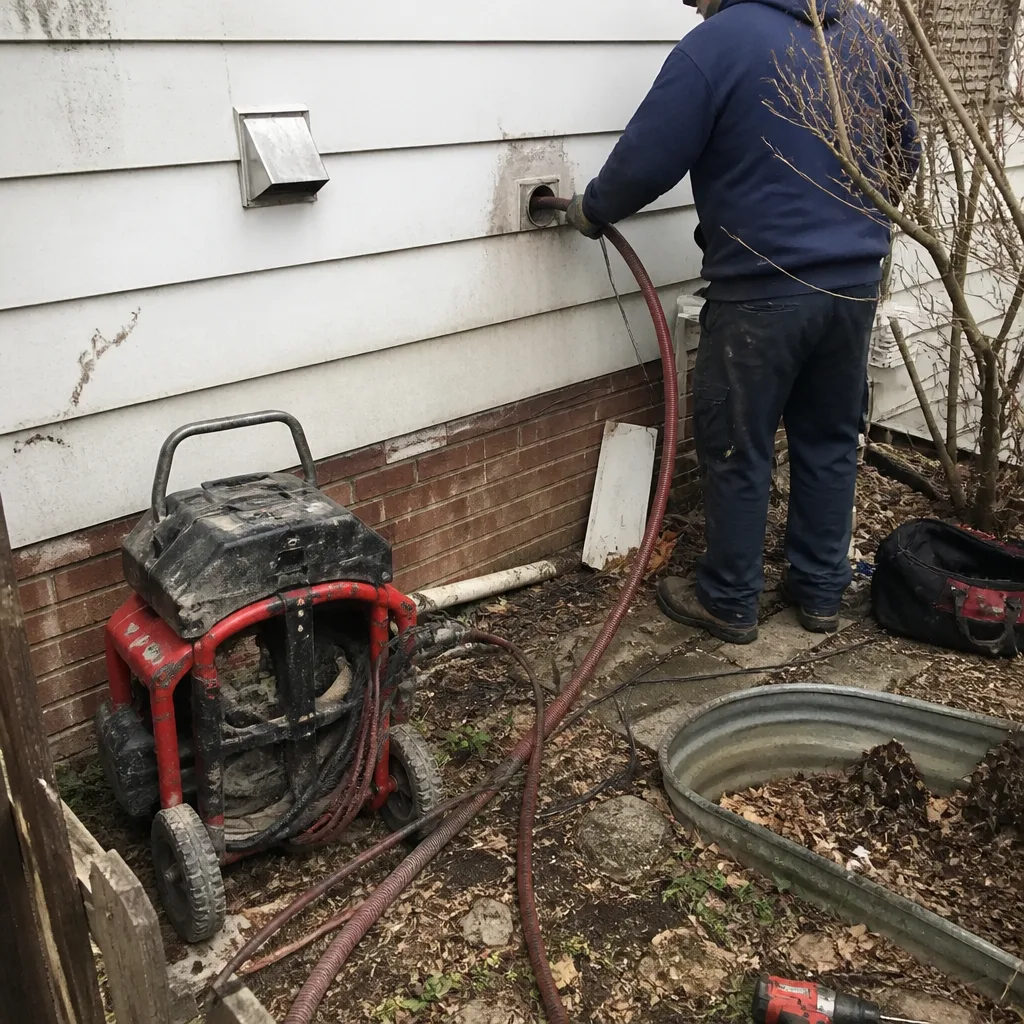 Before
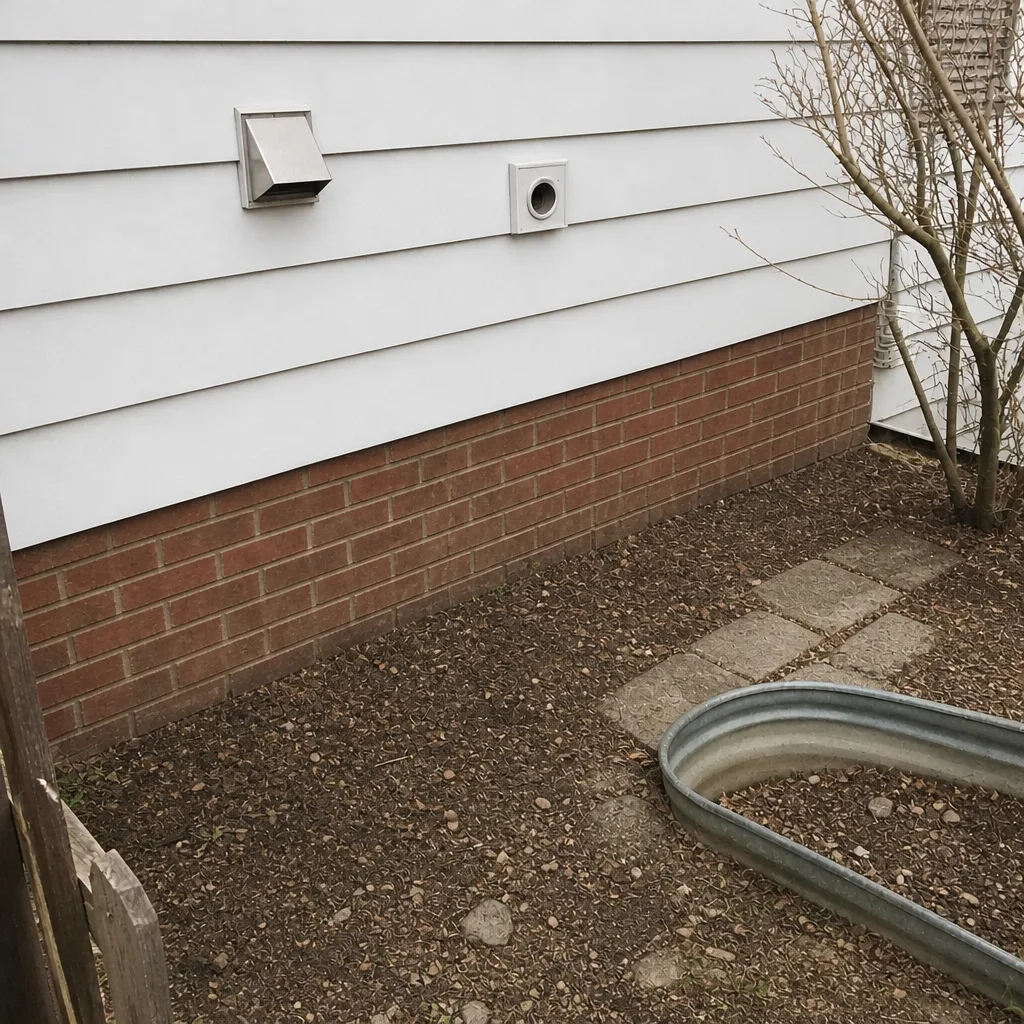 After
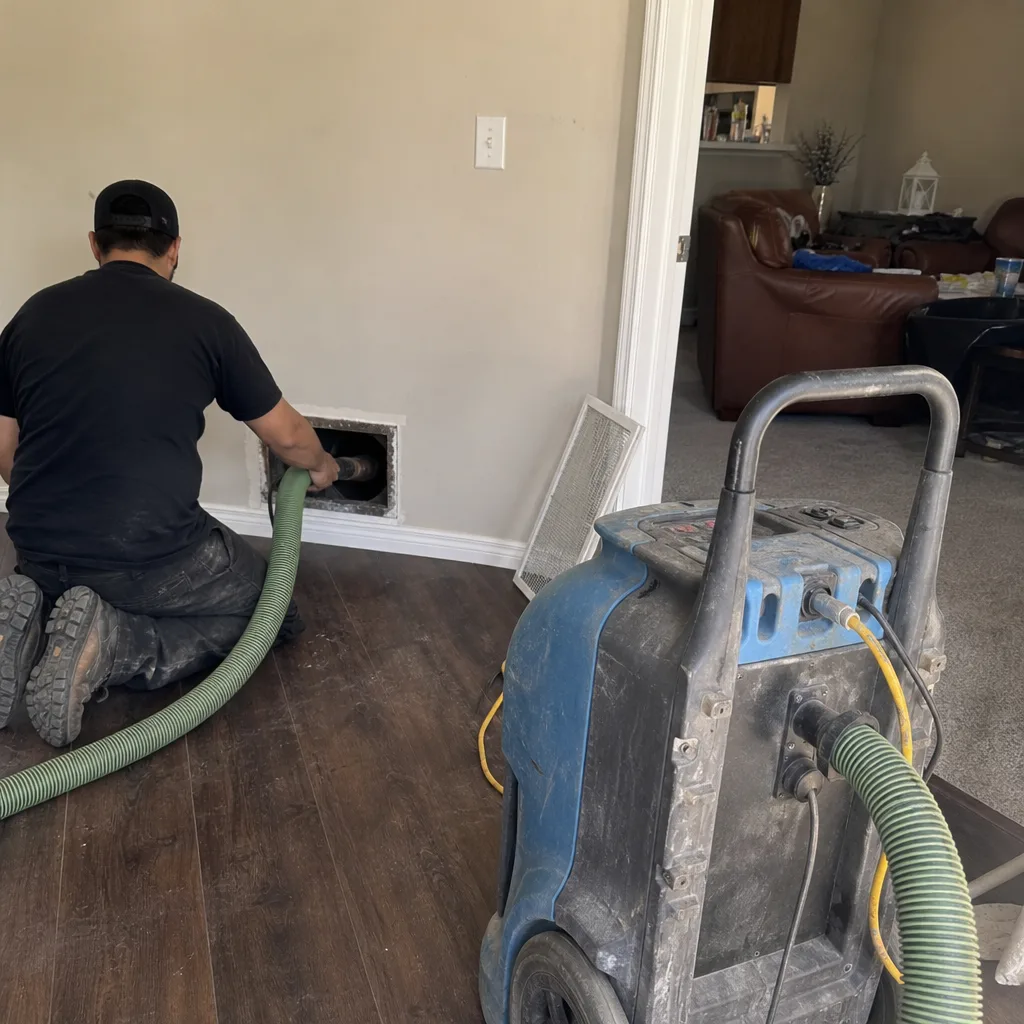 Before
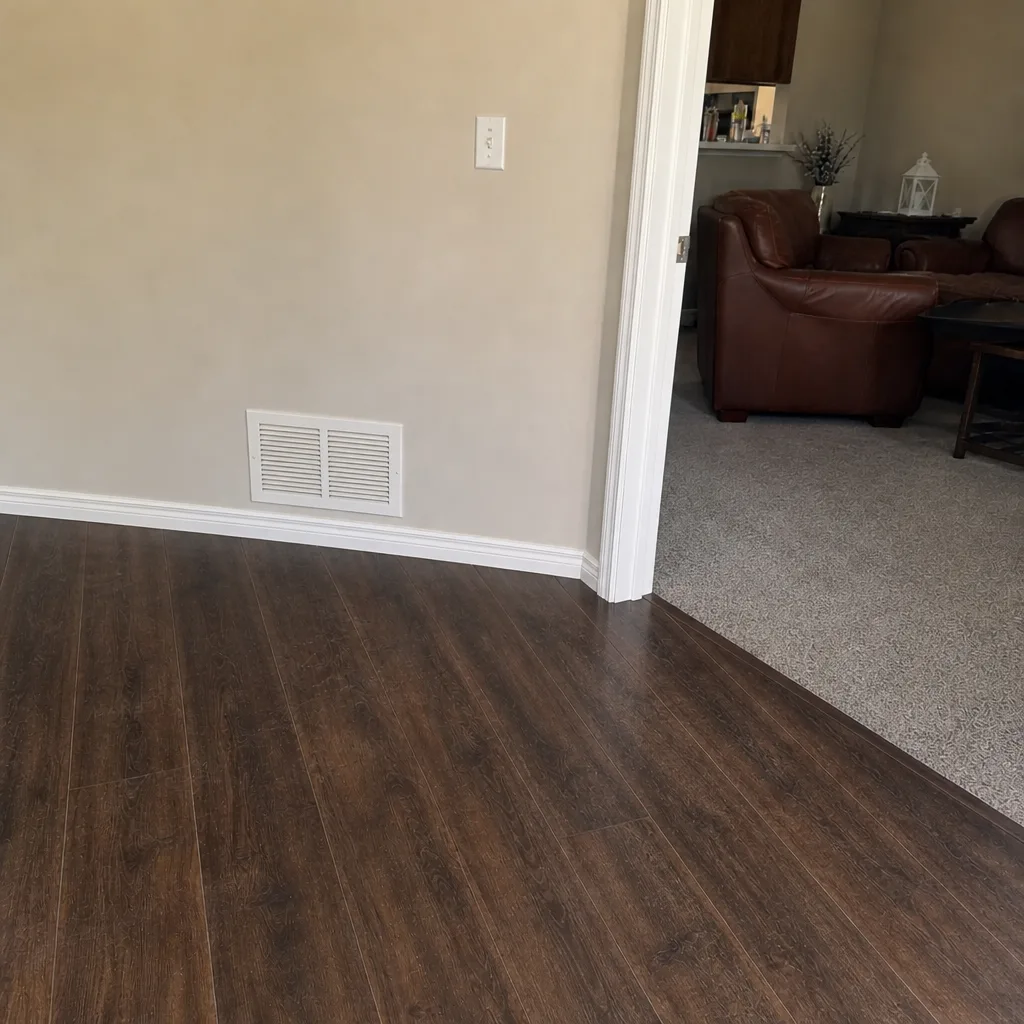 After
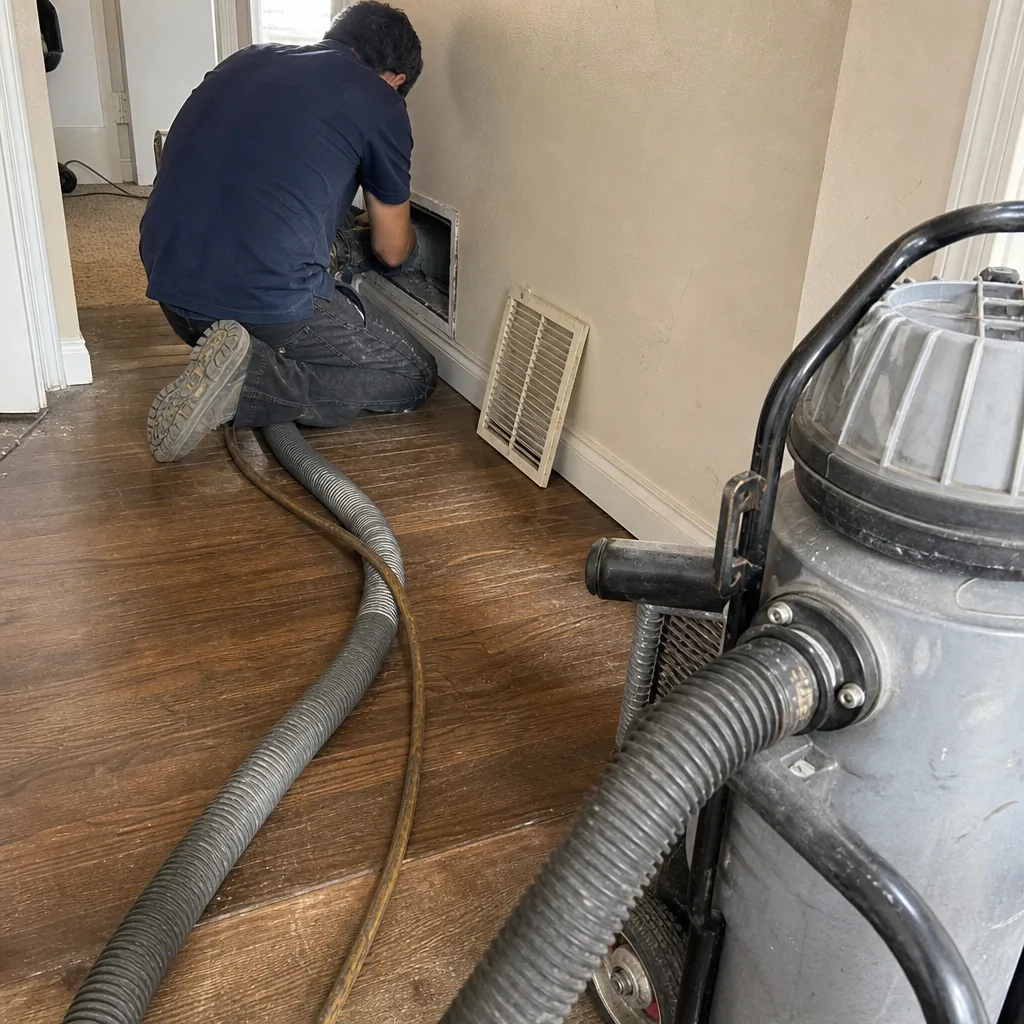 Before
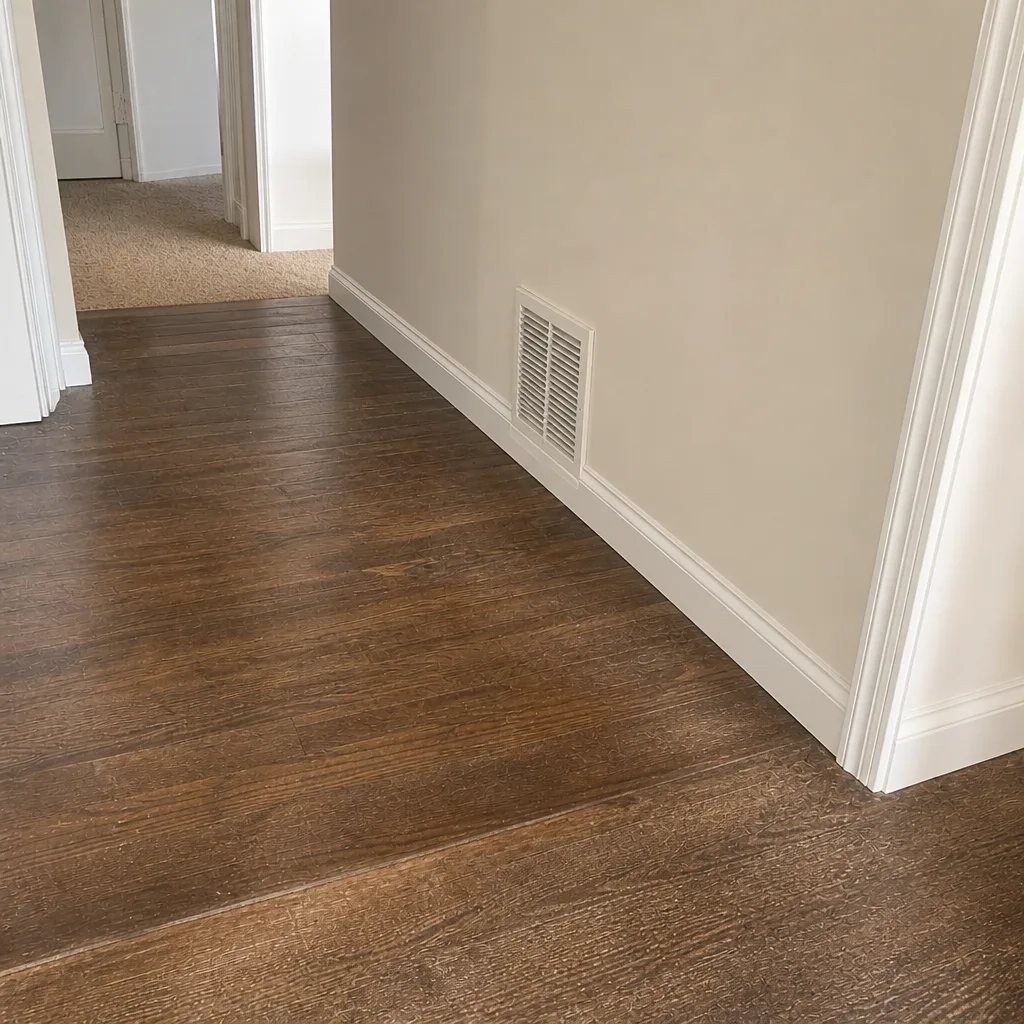 After
When to Call a Professional
A professional is worth calling when duct debris, joint failure, moisture, pest activity or system inefficiency are suspected and you want actual answers instead of guesses. Visible dust patterns around registers, rooms that never seem to heat or cool evenly, higher-than-usual energy bills with no other explanation, or persistent respiratory symptoms in one room of the house are all worth a call. Dryer vents are another common one: lint accumulation is a fire risk, and a professional cleaning of the vent line makes that risk materially smaller. Anyone planning ductwork modifications before a sale, or who’s just purchased a home and doesn’t know the history of its duct system, should have a professional inspection on the schedule before anything else changes.
Broomfield Air Duct Cleaning offers free estimates in Broomfield – call (866) 947-8482. We answer 24/7. Fast dispatch from 7am to 7pm, Sunday through Friday.
Frequently Asked Questions
No. Cleaning air ducts does not require a permit in Broomfield or in most Colorado jurisdictions. Cleaning is maintenance, so it doesn’t alter the mechanical system. The permit question only becomes relevant if the job moves into sealing, rerouting or replacing duct components. Call (866) 947-8482 if you want a scope reviewed before authorizing work – estimates are free.
Sometimes. Small-scale joint sealing in accessible duct runs is often treated as maintenance, but substantial sealing, rerouting or liner replacement typically requires a permit and a follow-up inspection. The scope of the work is the deciding factor, not the word “sealing.” Confirm with your jurisdiction’s building department before approving anything beyond a basic joint repair.
The product label, the EPA registration number, and the safety data sheet should all be provided. Any legitimate antimicrobial product is EPA-registered and carries both pieces of information. If a technician offers sanitizing without producing those documents on request, that’s a reason to decline or postpone the treatment.
Yes. Colorado sellers are typically required to disclose known unpermitted work, and an inspector working for a buyer may identify duct modifications without permit records. That can trigger renegotiation or delay. If the work was performed, get written documentation from the contractor and confirm with the building department whether the modification should have been permitted.
Call the consolidated city and county building department with your address in hand. They’ll confirm whether your property routes through the city side or an unincorporated area and which code edition applies. Get the answer in writing (a confirmation email is enough) so it’s documented if the question ever resurfaces during a sale or insurance claim.
Low quotes usually reflect consumer-grade equipment, no containment protocols, and no inspection of what’s actually in the ducts. The work looks finished but leaves the deepest debris in place. Professional-grade equipment, proper containment and a real inspection produce measurable results; a coupon price buys a surface-level pass. Call (866) 947-8482 for a straightforward scope and an honest estimate on the whole system.
The Bottom Line
Cleaning your ducts is a maintenance job with no permit requirement, and that’s the case for the vast majority of duct work in Broomfield. The moment a technician proposes sealing, rerouting, liner replacement or any modification beyond cleaning a joint, the permit question becomes yours to ask and the contractor’s to answer. Duct sanitizing sits in its own category: no permit, but EPA-registered product documentation is non-negotiable. Check your Broomfield address against the right jurisdiction before any permitted work, get the scope in writing, and keep the before-and-after photos. A properly documented duct job protects you on insurance and on your eventual sale. Broomfield Air Duct Cleaning does the work and produces the paperwork so you never have to chase it down. Call (866) 947-8482 for a free estimate. We answer 24/7. Fast dispatch from 7am to 7pm, Sunday through Friday.
Written by the team at Broomfield Air Duct Cleaning.