
Last updated November 25, 2026
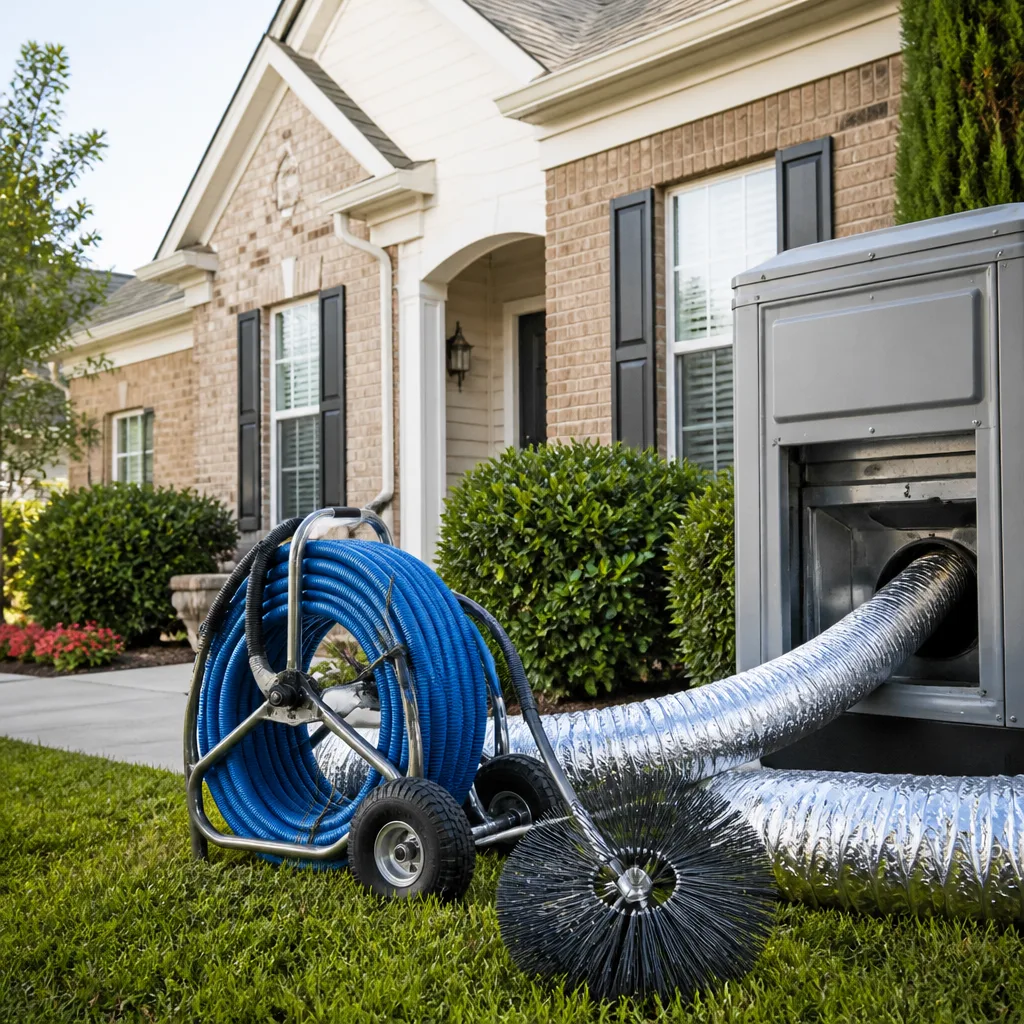 Whole-home duct cleaning
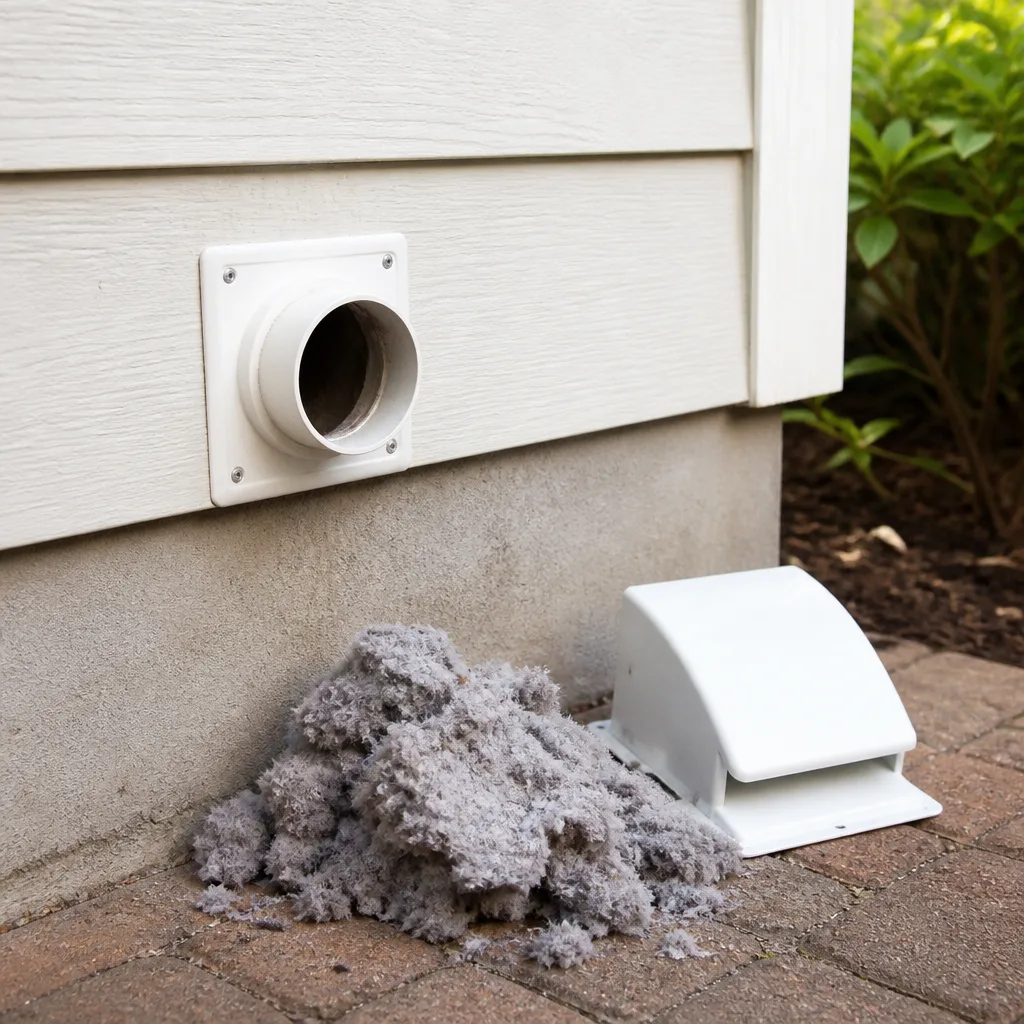 Dryer vent cleaning
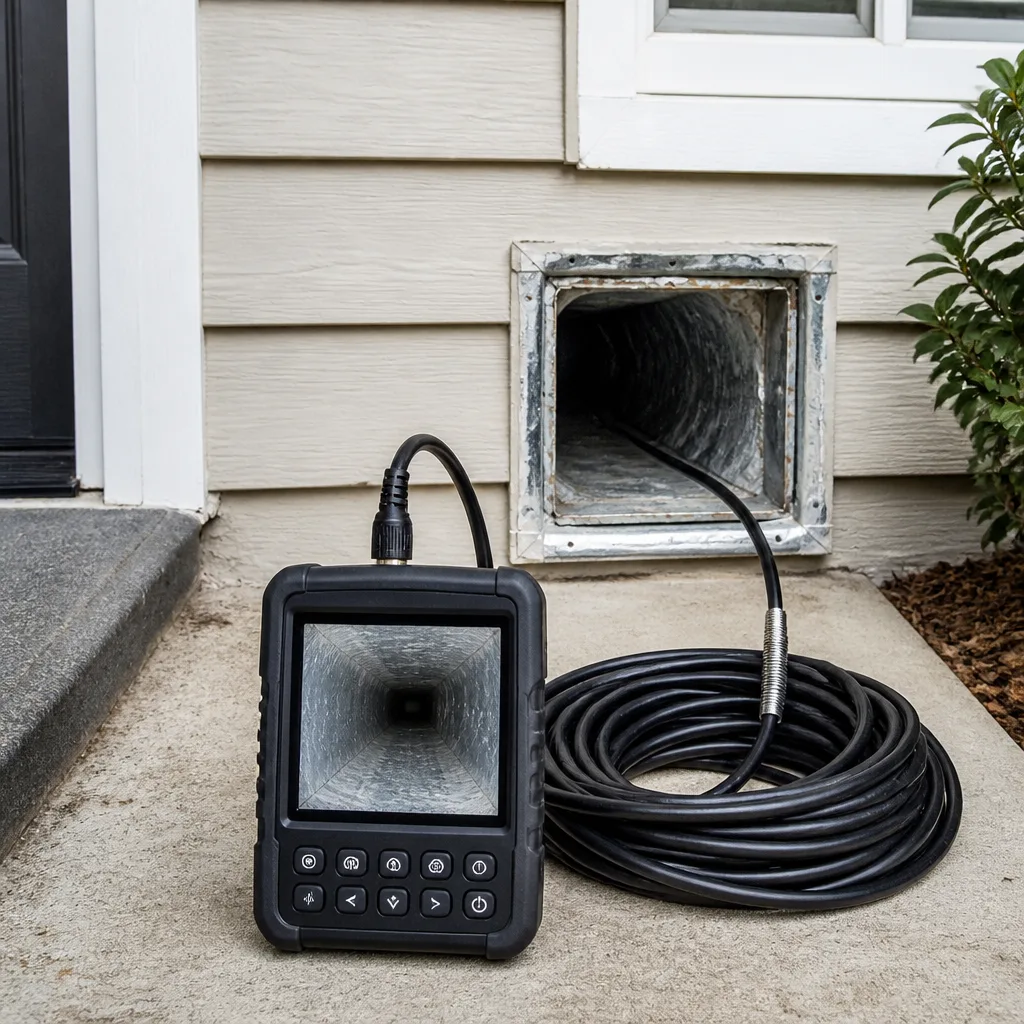 Camera inspection
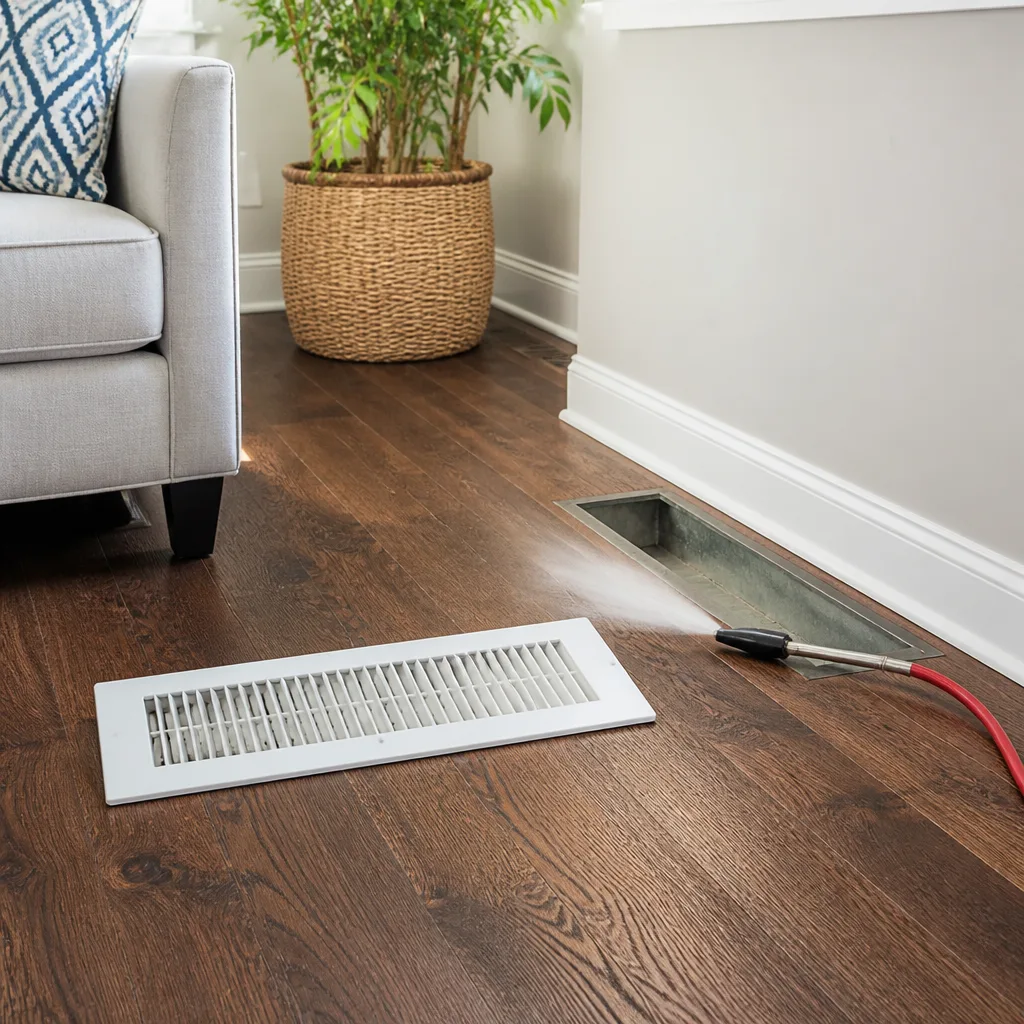 Sanitizing & deodorizing
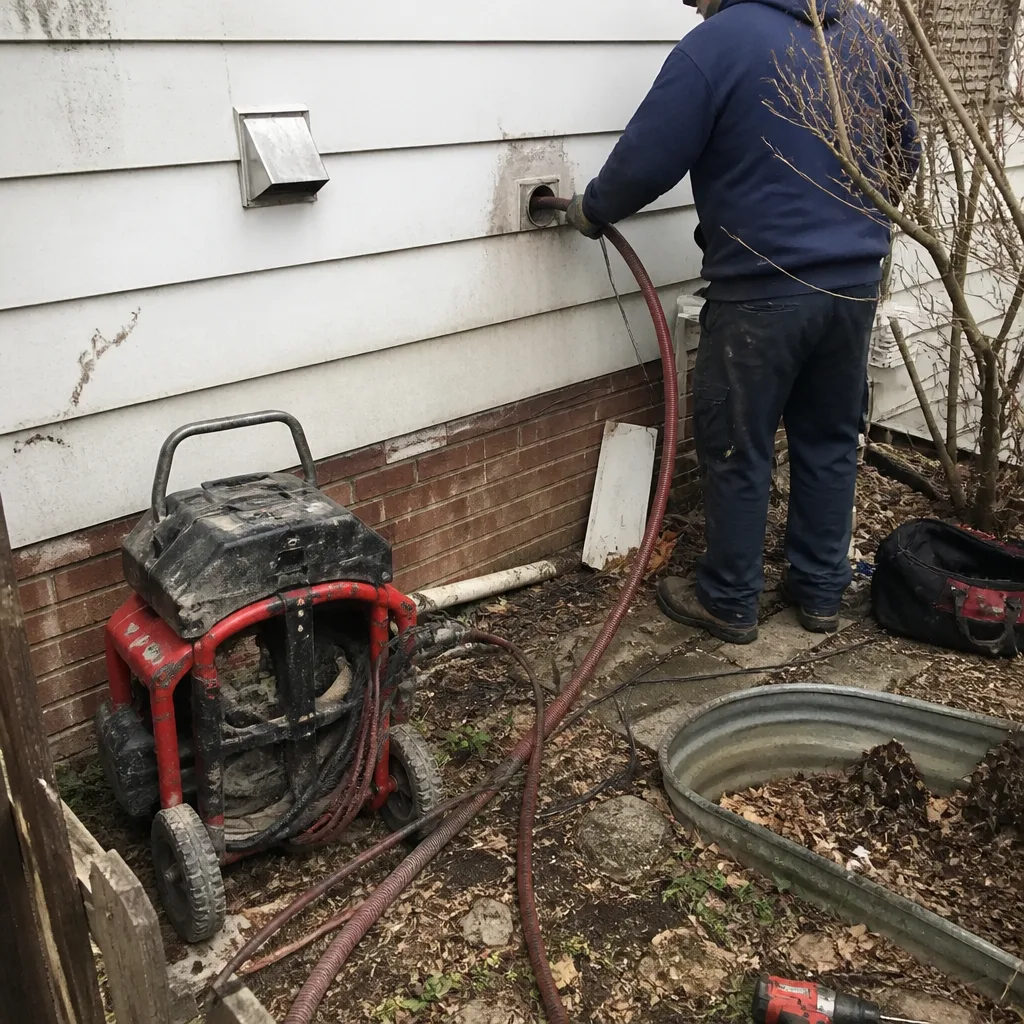
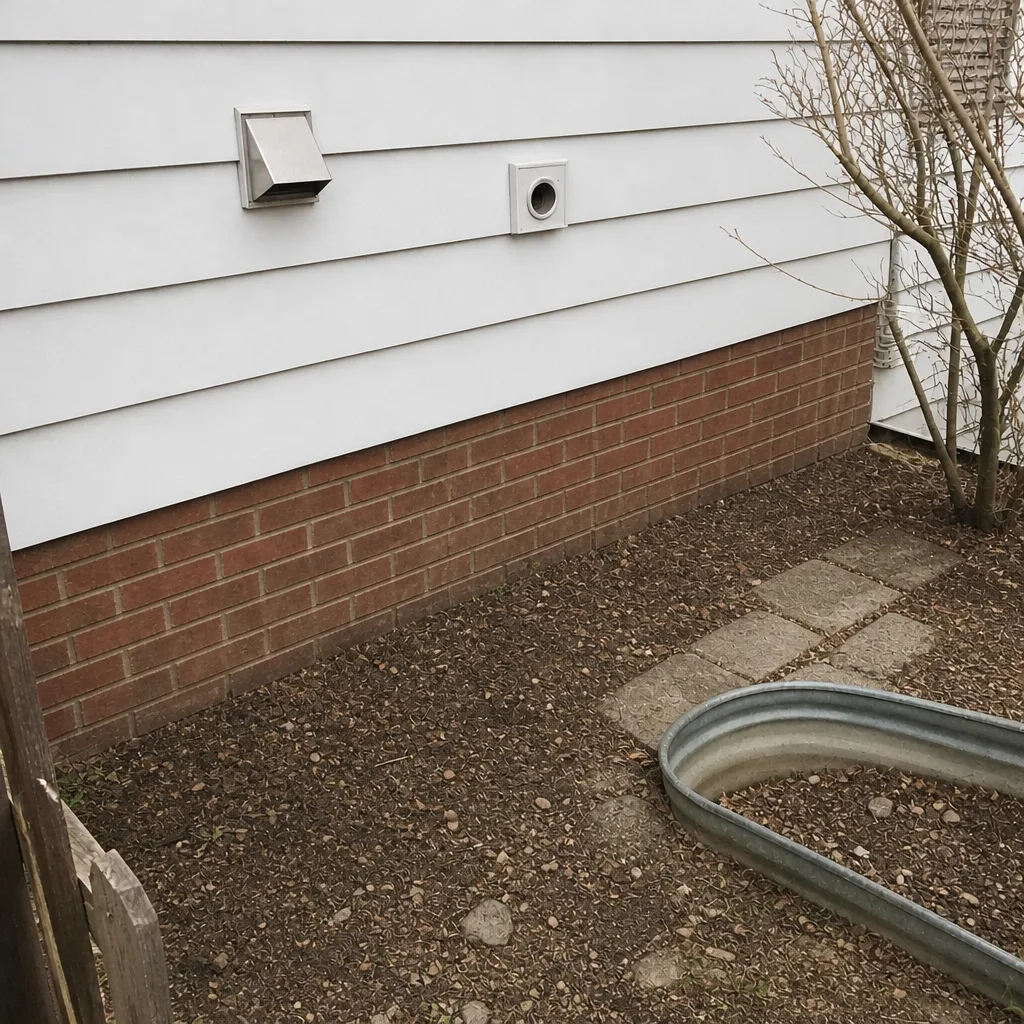
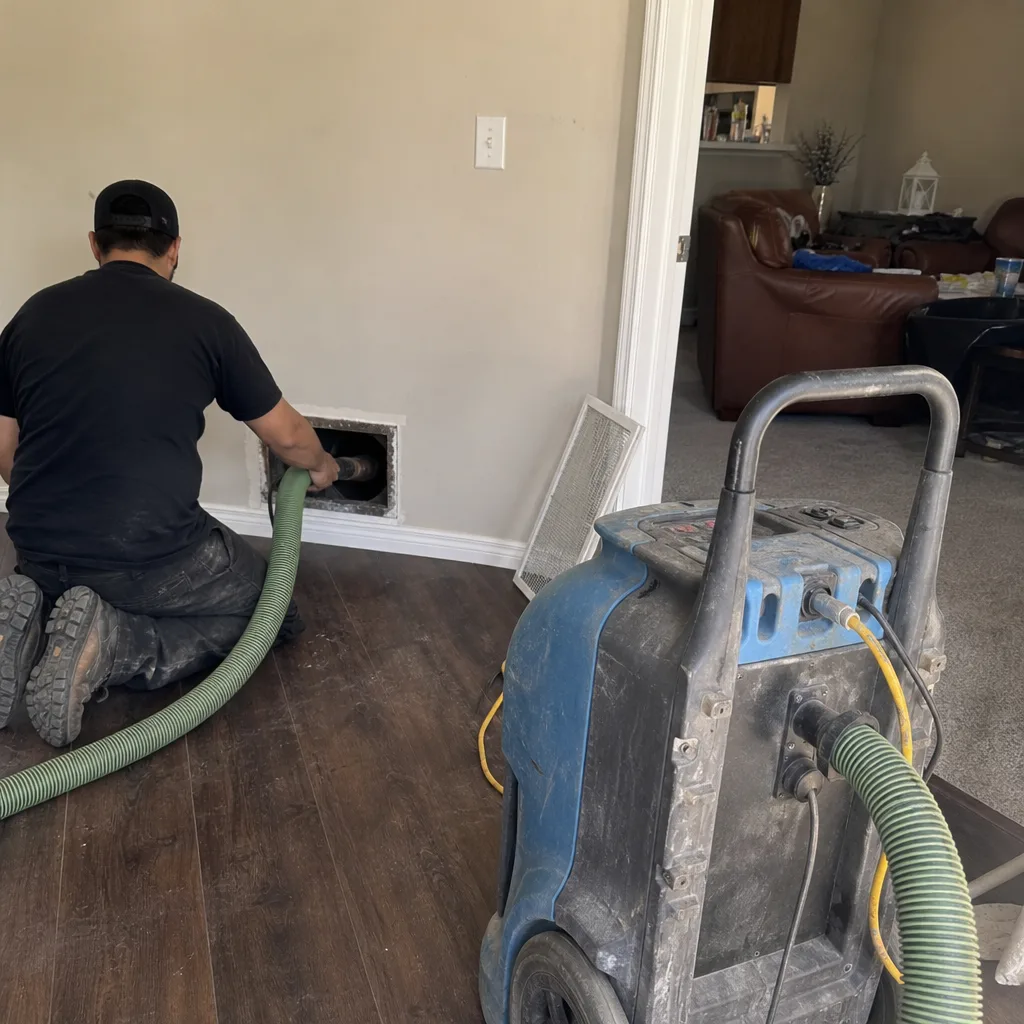
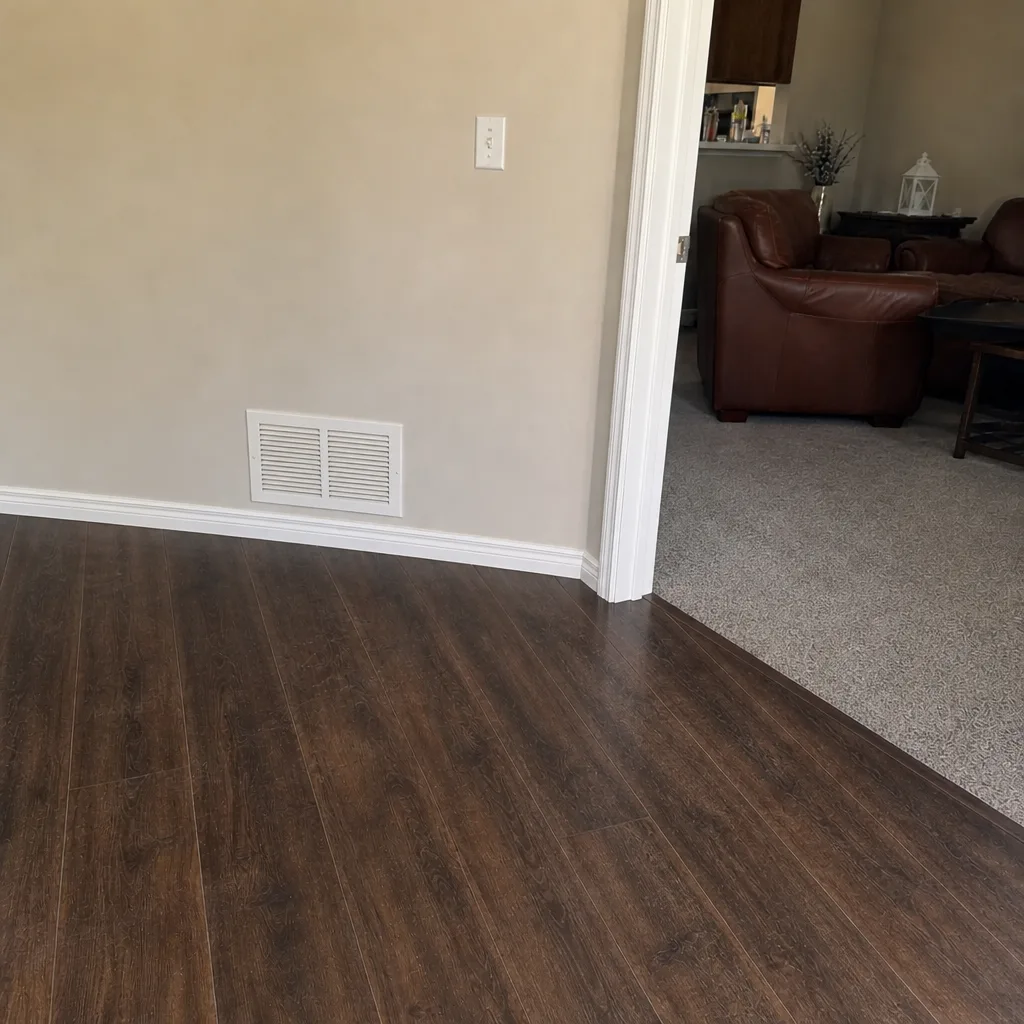
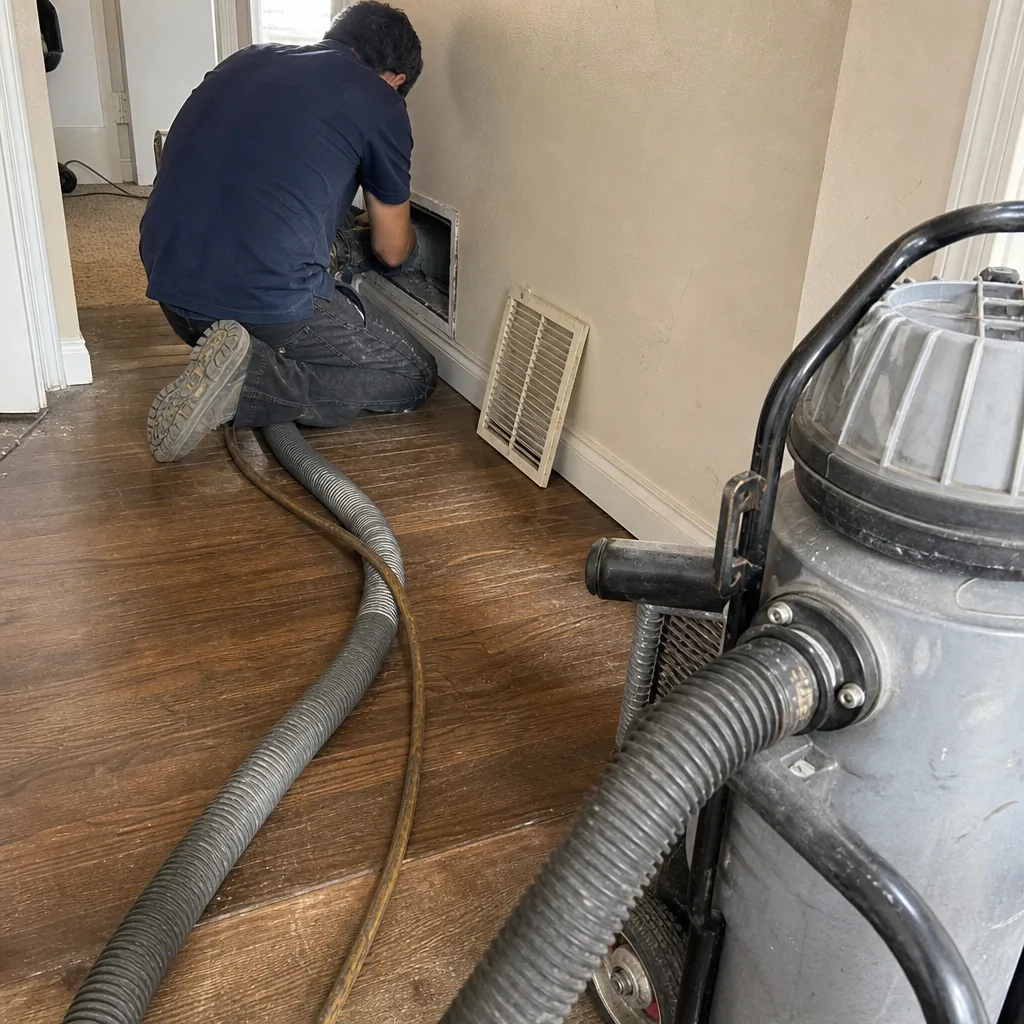
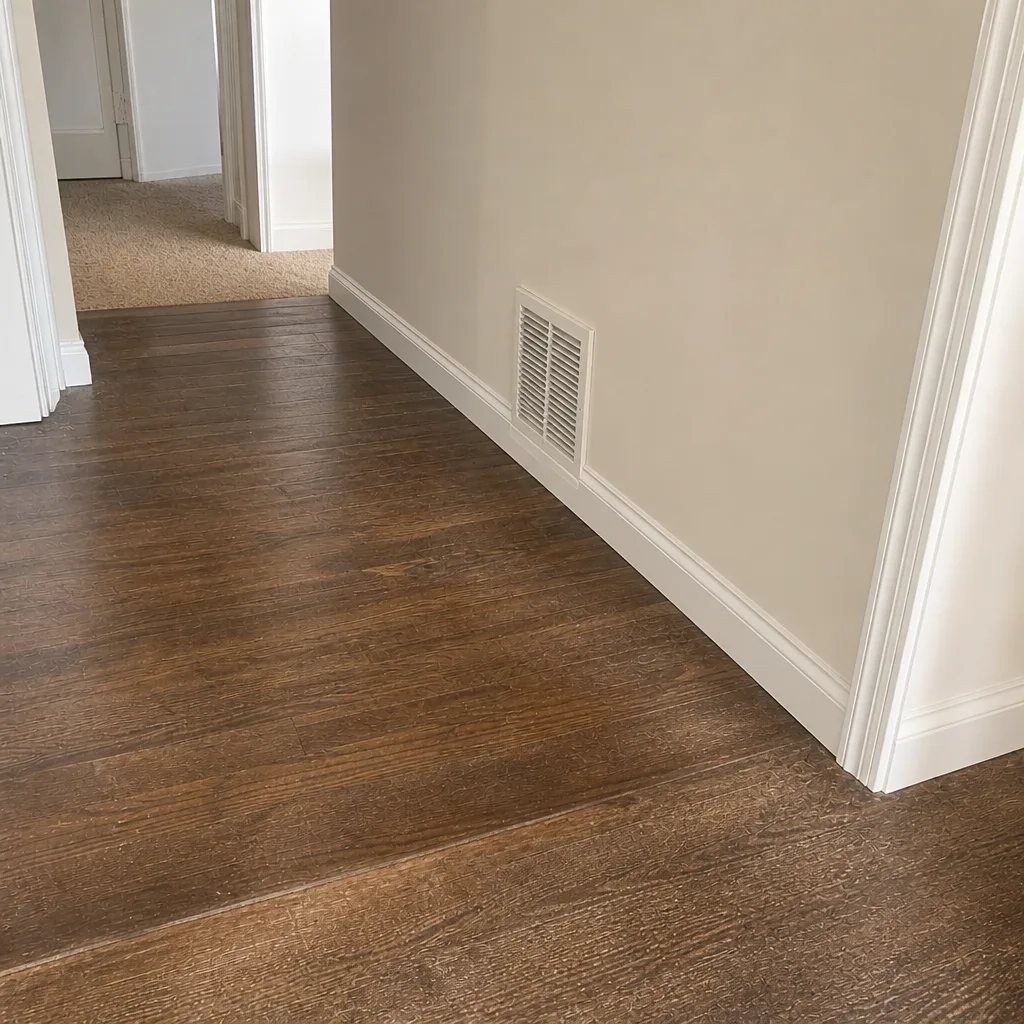
Whole-system duct and dryer vent check with before-and-after photos - you see exactly what came out of your vents
That "$99 whole-house special" is a bait ad - the real number appears once they are in your hallway, or the "clean" is a shop-vac at the register. We photograph the inside of your ducts before and after instead.
Air Duct Cleaning Cost Breakdown: The Broomfield Homeowner’s Reference for 2026
Here’s the thing about duct cleaning quotes in Broomfield: two houses on the same street, both roughly 2,200 square feet, both with the same furnace, can get quotes that differ by $700. Homeowners assume the cheaper tech is cutting corners or the expensive one is padding the bill. Sometimes that’s true. Usually it’s not. The gap almost always comes down to what’s actually being cleaned, how it’s being cleaned, and with what equipment. A per-vent price and a whole-system price are two different products wearing the same name. This guide breaks down every line item you’re likely to see on a Broomfield quote, translates each one into what it means for your air, and shows you how to tell a credible price from a bait-and-switch one before anyone knocks on your door.
Quick Answer
Air duct cleaning in Broomfield typically runs $350 to $700 for a whole-house system, while per-vent pricing often lands somewhere between $25 and $45 per vent and can total $500 or more once you add the vents you forgot to count. The number itself matters less than what’s included. A quote that names the equipment, the scope, and whether repairs or sealing are part of the job is worth more than one that just says “$99 whole house.”
Styles & brands we work with
- Whole-home duct cleaning
- Dryer vent cleaning
- Camera inspection
- Sanitizing & deodorizing
Table of Contents
- Why Broomfield Quotes Range From $89 to $900+
- Per-Vent vs. Whole-System Pricing: What Each Actually Costs
- Line-Item Breakdown: What Every Quote Is Really Charging For
- Cost Variables Specific to Broomfield Homes
- Add-Ons: Coil Cleaning, Dryer Vents, and Sanitizing
- How to Read Multiple Quotes and Spot the Outliers
- Total Cost of Ownership: What Cleaning Actually Saves
- Common Mistakes to Avoid
- When to Call a Professional
- Frequently Asked Questions
Why Broomfield Quotes Range From $89 to $900+
That $89 coupon you’ll see advertised covers the inspection and roughly three supply vents in a standard home. Everything past that is an upsell. Some of those upsells are legitimate and necessary. Some are padding. Understanding the cost structure before you call is the difference between walking a tech through your home with confidence and getting talked into services you don’t need.
The real reason quotes swing so wide in Broomfield isn’t square footage. It’s three things: what equipment is being used, how much of the system is actually touched, and whether the job includes any repair or sealing work. A crew running a consumer-grade shop vac with a brush attachment is not doing the same job as a crew running a Rotobrush or Nikro system, and the price should reflect that. The equipment difference isn’t cosmetic. A proper duct cleaning system uses negative pressure and agitation together, which pulls debris out of the system rather than stirring it into the air in your living room.
The second swing factor is scope. “Duct cleaning” can mean everything from the supply trunk to the return plenum to the air handler coil, or it can mean the visible registers and nothing else. Contractors who only do the surface will be cheaper because there’s less work. The catch is that the contaminants you can’t see stay where they are.
The third factor is geography. Broomfield sits at about 5,400 feet, and high-altitude HVAC configurations behave differently. Systems here are sized and tuned for thinner air, which affects airflow, static pressure, and how debris accumulates in certain runs. We see more buildup in return trunks and in basement-level runs in a mile-high market than in lower-elevation systems of similar age. A contractor who understands that will price a job to reflect it. One who doesn’t will quote you a flat rate and hope it works out.
A credible floor price in the Broomfield market for a real whole-house cleaning, with proper containment and equipment, is around $350. Below that, you’re getting an inspection and a surface pass, not a cleaning. Above $900, you’re probably being quoted for add-ons you didn’t ask for, or a system that’s genuinely larger or more complex than average.
Per-Vent vs. Whole-System Pricing: What Each Actually Costs
There are two ways duct cleaners price a job, and the model they choose tells you something about how they work. Per-vent pricing charges by the number of registers and returns. Whole-system pricing charges for the entire run, top to bottom, regardless of vent count.
Per-vent pricing
Per-vent pricing in Broomfield usually lands in the $25 to $45 range per vent. A standard three-bedroom, single-story ranch might have 12 to 16 supply vents and two to four returns. Multiply that out and you’re at $350 to $700 for a mid-sized home, sometimes higher once returns are factored in. The appeal of per-vent pricing is transparency: you can count your vents and forecast the bill. The problem is that vent count doesn’t map cleanly to system complexity. A 1960s ranch with an unfinished basement might have 12 vents and a 40-foot trunk of flexible ductwork with multiple elbows. A newer two-story build might have 22 vents and a simpler, tighter layout. Per-vent pricing rewards the wrong thing.
Whole-system pricing
Whole-system pricing quotes a single price for cleaning the air handler, the return trunks, the supply trunks, and every register and return in the system. It’s usually higher than the per-vent number on the surface, but it’s also easier to compare across contractors because the scope is fixed. When you look at a whole-system quote, ask the contractor to spell out exactly what’s included. If the answer is “everything,” ask what “everything” covers. Ductwork, air handler, coil, registers, return grilles, drain pan, and any accessible plenum should all be named.
Per-vent pricing isn’t inherently dishonest. It’s just easier to shrink. A contractor can charge you for 12 vents and clean the six easiest ones. Whole-system pricing forces the scope to be defined up front. Combined with before-and-after photos of your actual ducts, it’s a far more honest structure. That’s why our flat price per system, agreed before work starts, is built the way it is.
What about hybrid quotes?
Some contractors quote a base price plus per-vent overages. These can work, but read the fine print. The “base” often covers 8 or 10 vents, and the overage per vent is where the real money hides. If you have 18 vents, the overage line can double the total. Ask for a total, in writing, before anyone starts.
Line-Item Breakdown: What Every Quote Is Really Charging For
A good Broomfield quote should be itemized enough that you can see what you’re paying for. Below is a typical breakdown, with real price ranges and what each line is actually doing.
| Line item | Typical Broomfield range | What it covers |
|---|---|---|
| Inspection & system walkthrough | $0 (usually included) | Visual check of accessible ductwork, air handler, and registers; a camera sweep in some cases |
| Supply duct cleaning | $150 – $300 | Agitation and negative-pressure extraction on supply trunks and branch runs |
| Return duct cleaning | $75 – $175 | Same process on return trunks, which often carry the heaviest debris load |
| Register and grille cleaning | $5 – $15 per register | Removal, cleaning, and reinstallation of supply and return covers |
| Air handler cleaning | $100 – $250 | Interior cabinet, blower area, and drain pan wipe-down |
| Coil cleaning (evaporator) | $100 – $250 | Cleaning of the A/C evaporator coil to restore heat exchange efficiency |
| Duct repair & sealing | $75 – $400 (varies by leak count) | Sealing accessible leaks, reconnecting dislodged joints, replacing damaged sections |
| Sanitizing treatment | $75 – $200 | Application of an EPA-registered sanitizer after cleaning |
| Dryer vent cleaning (add-on) | $100 – $200 | Full-length dryer vent run, lint trap to exterior termination |
| Before-and-after photo documentation | $0 (should be standard) | Photos of accessible duct interiors, register covers, and air handler |
A few things to notice about that table. First, the inspection should be free. If a contractor charges for an inspection and won’t credit it toward the job, ask why. Second, register cleaning is often folded into the supply and return line items rather than listed separately. That’s fine as long as the total scope is clear. Third, repair and sealing should always appear as a separate line when it’s needed, because it’s work that goes beyond cleaning and has its own labor and materials cost.
The most important line on the quote isn’t the total. It’s the equipment. If the contractor can’t name what they’re using, the quote is a guess. Professional-grade systems like Rotobrush and Nikro are standard on a real Broomfield cleaning job, and the price should reflect that. When we quote a system, we’re factoring in the time it takes to set up containment, run the machine properly through every accessible run, and document the result.
Cost Variables Specific to Broomfield Homes
Broomfield has an unusual housing mix for the Front Range. There are mid-century ranches, newer master-planned subdivisions, two-story builds with finished basements, and a lot of homes where the original ductwork has been added to or modified over time. Each of those adds its own cost variable to a duct cleaning job.
Single-story ranch vs. two-story
A single-story ranch is usually the simplest duct cleaning job because most of the ductwork runs through the attic or the crawlspace in a single horizontal trunk. Access is manageable, the total linear footage is shorter, and there are fewer branch runs to negotiate. A two-story home often has a zoned system with separate trunks running to the upstairs, plus a longer return run pulling back to the air handler. That extra length and complexity usually adds $75 to $150 to a Broomfield quote. It’s not a scam. It’s more work.
Finished basement duct runs
A finished basement is the single biggest cost variable in Broomfield duct jobs that surprises homeowners. When a basement is finished, the ductwork serving it is usually boxed in behind drywall soffits or dropped ceilings. Access is limited, so cleaning has to happen through the registers themselves rather than through the duct body. That takes longer, and it may require more specialized agitation tools. It also means the contractor can’t visually verify every section of the run. A good contractor will tell you that up front. A bad one will claim they saw everything anyway.
High-altitude HVAC configuration
At 5,400 feet, the air is thinner, and HVAC systems here are configured for it. Furnaces and air handlers in Broomfield are typically tuned with different blower settings, static pressure targets, and in some cases different return sizing than you’d see at sea level. That doesn’t change the duct cleaning process, but it does change how the cleaning interacts with the system. Cleaning a system without understanding its airflow profile can throw off balancing. A contractor who’s cleaned a lot of Broomfield systems knows this. One who hasn’t may not.
Duct material and age
Flexible duct, rigid metal duct, and ductboard all clean differently. Flex duct is the most delicate and the most common in newer Broomfield builds; it takes gentler agitation and careful handling to avoid tearing the inner liner. Rigid metal is more forgiving but can have decades of hardened buildup in the joints. Ductboard is somewhere in between. A contractor who only owns one type of tool will quote every house the same way and hope for the best.
System size and zoning
A 1,400-square-foot Broomfield home with a single-zone system is a very different job from a 3,500-square-foot home with two or three zones. Each zone adds its own trunk, its own return, and its own set of registers. The cleanup time scales with it. If your quote doesn’t ask how many systems and zones you have, that’s a red flag.
Add-Ons: Coil Cleaning, Dryer Vents, and Sanitizing
Add-ons are where most of the confusion in a duct cleaning quote happens. Some are genuinely worth it for Broomfield homes. Others are routine upsells that add cost without adding much. Here’s how to sort them.
Evaporator coil cleaning
Worth it in most cases. The evaporator coil is where the air passes over cold refrigerant, and it’s the single most common place for dust and biological growth to accumulate inside a forced-air system. A dirty coil forces the system to work harder to cool the same space, which raises energy use and shortens equipment life. If your system is more than three years old and has never had the coil cleaned, it’s probably due. The $100 to $250 range is standard in Broomfield, and the return on that spend is usually visible on your next summer electric bill.
Dryer vent cleaning
Worth it, especially as a scheduled service. Lint accumulates in a dryer vent regardless of duct cleaning, and a clogged vent makes the dryer run longer per load and creates a real fire risk. The $100 to $200 range for a full dryer vent cleaning is money well spent, and combining it with duct cleaning in the same visit saves a separate service call. A proper dryer vent cleaning goes the full length of the run, not just the visible lint trap area.
Duct sanitizing
Worth it conditionally. Sanitizing applies an EPA-registered antimicrobial product to the interior of the ductwork after cleaning. If your home has had a rodent problem, a water intrusion, or visible biological growth on the duct interior, sanitizing is a reasonable step. If the ducts are simply dusty, cleaning is the fix and sanitizing is optional. Ask the contractor what’s actually growing in the ducts before you agree to the upcharge.
Duct repair and sealing
Almost always worth it when the contractor finds a real leak. Leaky ductwork in a Broomfield home can lose a meaningful chunk of conditioned air before it ever reaches a room, and any leak is an entry point for dust, attic insulation fibers, and outside air. Repairing and sealing during the cleaning visit is far cheaper than calling a separate contractor. This is why we build repair into every job – if we find a leak, we fix it while we’re there rather than handing you a list of problems and a separate bill.
Air-quality equipment upgrades
Optional, but worth considering if you have chronic indoor air concerns. We work with Aprilaire and Honeywell product lines, which means if a cleaning reveals that your system could benefit from a better filtration setup or a whole-home humidifier for Broomfield’s dry winters, that conversation can happen in the same visit. You don’t have to act on it. But knowing the option exists is useful.
What to skip
Skip anything that sounds like it’s solving a problem you can’t verify. “Duct coating” that promises to “seal in” contaminants without addressing the source is generally not worth it. Enzyme treatments applied by a tech who can’t tell you what they’re targeting are a no. Ultraviolet lights sold as a “cure” for indoor air quality are oversold; they have uses in specific cases, but they aren’t a substitute for cleaning. If a tech is pushing any of those with urgency, ask why and consider getting a second quote.
How to Read Multiple Quotes and Spot the Outliers
Getting three quotes for air duct cleaning in Broomfield is the single best defense against overpaying or under-scoping the job. But comparing them line-by-line takes some practice. Here’s a step-by-step way to read them.
- Check whether the quote is per-vent or whole-system first. If one contractor prices per-vent and another quotes a flat system price, convert the per-vent number using your actual vent count before comparing totals. A $25-per-vent quote on 20 vents is $500, which may or may not be cheaper than a $450 flat-system quote that includes the air handler and the coil.
- Confirm what “cleaning” means to that contractor. Ask exactly which components are included: supply trunks, return trunks, air handler, coil, registers, and any accessible plenum. If any of those are missing from the written scope, the quote is not directly comparable.
- Ask what equipment they use. If the answer is vague (“a truck-mounted unit,” “our standard machine”), press for the brand. A contractor proud of their setup will name it. Professional-grade systems like Rotobrush and Nikro are the standard on a credible job, and so is containment equipment like Abatement Technologies if they’re moving real debris.
- Ask whether before-and-after photos are included. This is the single easiest trust check in the industry. If the contractor doesn’t offer photos by default, ask if they will. If they won’t, that tells you something about how they document their work.
- Look at the repair and sealing line. A quote with no mention of duct inspection for leaks isn’t a full scope. A quote that offers repair as a same-visit add-on is a contractor who does the whole job.
- Flag any quote with a low base price and a long list of conditional surcharges. “Base $99 plus $30 per additional vent, plus $75 for return cleaning, plus $150 for the air handler” is not a $99 job. Add it up before you book.
- Watch for the “suspiciously high” tell too. A quote that includes sanitizing, duct coating, UV lights, and a “whole-home air purification package” without you asking for any of it is probably priced for margin. A real scope with real work is somewhere in the honest middle.
The pattern to look for is consistency. A contractor who names their equipment, documents their work, lists a clear scope, and quotes a whole-system price in the $350 to $700 range is doing honest work. A contractor whose quote has more conditional clauses than a mortgage is probably not.
Total Cost of Ownership: What Cleaning Actually Saves
Duct cleaning isn’t just a one-time cost. It’s a maintenance line item that affects three other budgets: HVAC energy use, filter replacement, and equipment lifespan. Looking at those together reframes the whole decision.
Energy efficiency
Dirty ducts and a dirty evaporator coil force the system to run longer to move the same amount of conditioned air. Restricted airflow means the compressor works harder, the blower runs longer, and the system uses more electricity per degree of cooling. Cleaning restores airflow and, in most homes with a noticeable buildup problem, brings the system back toward its original efficiency. The savings show up on your summer bills, particularly in a Broomfield summer where cooling runs hard from June through August. If you’ve noticed the system cycling more often than it used to, that’s a signal.
Filter replacement frequency
A duct system with heavy debris loads quickly clogs filters, which means you’re replacing filters more often than the recommended schedule. After a thorough cleaning, most homeowners find their filters last longer between changes because there’s less free debris circulating in the system. That’s a small ongoing annual saving, but it adds up over several years. It’s also a signal: if you’re replacing filters well ahead of schedule, that’s usually a sign of duct debris upstream that cleaning will address.
HVAC system lifespan
This is the biggest number in the total-cost calculation, even though it’s the hardest to quantify precisely. A system that runs with restricted airflow and a dirty coil wears harder on the compressor and the blower motor than a clean one. Cleaning doesn’t add years to your system in a guaranteed way, but it does put the system on a lower-stress operating profile. Over a 15-to-20-year system life, that reduction in stress usually translates to at least one avoided premature failure. If a system replacement in Broomfield runs several thousand dollars, then a $500 to $700 cleaning every few years is inexpensive insurance.
The total-cost framing
Add it up this way: an honest whole-system cleaning at $500 in year one costs less than an early equipment failure, less than a season of inefficient cooling, and less than the filter buy you’ll do if debris loads stay high. That doesn’t mean you should clean every year – more on that in the FAQ – but it does mean the “expensive” quote often costs less over time than the “cheap” one, because the cheap cleaning leaves the problem in place.
Common Mistakes to Avoid
- Choosing on price alone without reading the scope. A $99 coupon and a $550 whole-system quote are not the same product, and comparing them as if they are guarantees you’ll be surprised by the final bill. Always compare the scope, not the sticker.
- Booking with a contractor who can’t name their equipment. If a tech can’t tell you what brand of machine they’re running, they’re either subbing the job out or using consumer-grade gear. Neither is what you want on a mile-high system.
- Assuming square footage sets the price. A 2,000-square-foot ranch with an unfinished basement is usually a simpler job than a 2,000-square-foot two-story with a finished basement and zoned system. Scope and configuration matter more than square footage.
- Skipping the before-and-after photos. If you can’t see what your ducts looked like before and after, you can’t verify what happened. Any Broomfield contractor who won’t document their work should not be on your short list.
- Refusing duct repair because it’s “extra.” A leaky duct that stays leaky will re-contaminate the system faster than anything else. Repairing during the cleaning visit is cheaper than a separate service call later, and it protects the cleaning you just paid for.
- Combining duct cleaning with a separate contractor for the dryer vent or HVAC unit. You’ll pay multiple call-out fees for jobs that could have been one visit. A company that covers air duct cleaning, HVAC cleaning, and dryer vent work in one trip saves real money.
- Cleaning more often than the home actually requires. Annual cleaning is not the standard for most Broomfield homes. Every three to five years, or after a specific event like a remodel or a rodent intrusion, is a more honest schedule.
When to Call a Professional
Not every home needs duct cleaning right now. But certain situations make it the right call.
Call a professional if you’ve recently finished a remodel and drywall dust has been circulating through the system. Call if you’ve had a rodent or pest issue in the attic or crawlspace, because droppings in ductwork are a health concern that vacuuming a register won’t solve. Call if someone in the household has developed new allergies or respiratory symptoms that get worse inside the home and better when they’re away. Call if you notice visible dust streaks around the registers after running the system, or if the system smells musty when it kicks on. Call if your energy bills have crept up without a rate change, because that’s often restricted airflow. And call if it’s simply been more than five years since the last cleaning and you can’t verify what was done.
Broomfield Air Duct Cleaning offers free estimates in Broomfield. Call (866) 947-8482. We answer 24/7. Fast dispatch from 7am to 7pm, Sunday through Friday. Our technicians have up to 8 years of experience, and every cleaning includes before-and-after documentation of the work.
Frequently Asked Questions
Air duct cleaning in Broomfield typically runs $350 to $700 for a whole-house system, with the final number depending on the size of your system, the number of zones, whether the basement ductwork is finished or exposed, and whether duct repair or coil cleaning are added. Per-vent pricing often lands between $25 and $45 per vent but can total more than a flat whole-system quote once you count returns. Call (866) 947-8482 for an exact quote on your home – estimates are free.
Cheap quotes are almost always narrower in scope, not more efficient. A $99 quote usually covers the inspection and a few vents, and the rest is upsold on site. A genuinely low quote can also mean the contractor is using consumer-grade equipment instead of a professional-grade Rotobrush or Nikro system, or is skipping containment entirely. When you compare quotes, compare what’s included and what equipment is used before you look at the price. Call (866) 947-8482 for a quote you can compare against the others.
Ask for before-and-after photos of your own duct interiors, the air handler, and the register covers. That’s the simplest verification and should be standard on any legitimate job. On a proper cleaning, the crew removes register covers, works through each accessible run, and reassembles the system, so the photos should show the interior surfaces before agitation and after extraction. If a contractor won’t provide photos, that’s a reason to look elsewhere. Call (866) 947-8482 and we’ll walk you through exactly what the photos will show.
Every three to five years for most Broomfield homes, not annually. Homes with pets, recent remodels, or a history of pest intrusion may need it more often, and homes with clean, well-sealed systems can go longer. Annual cleaning is an upsell in most cases. If a contractor is pushing an annual plan, ask why your specific home needs it at that interval. Call (866) 947-8482 for a free assessment of what interval actually fits your home.
Yes, for the specific reasons that apply here. At 5,400 feet, systems are configured for thinner air, and any restriction from debris buildup affects airflow more visibly than at lower elevations. Dust also accumulates faster in Broomfield homes during the dry months when windows are open and there’s more particulate in the air. Cleaning restores the airflow the system was tuned for. It’s also worth combining with Broomfield Air Duct Cleaning and duct repair if the system has any accessible leaks. Call (866) 947-8482 to schedule.
You can vacuum visible register covers yourself, but that’s not duct cleaning. The debris that affects air quality and system efficiency is inside the ductwork and inside the air handler, and getting it out requires negative-pressure extraction and agitation tools that consumer equipment doesn’t replicate. A homeowner vac is more likely to stir up dust into the room than to remove it. Call (866) 947-8482 for a professional assessment – the estimate is free.
The Bottom Line
Duct cleaning prices in Broomfield swing by hundreds of dollars for homes of the same size, and the swing reflects scope and equipment, not square footage. A credible whole-system cleaning runs $350 to $700, includes the air handler and coil, documents the work with before-and-after photos, and uses professional-grade equipment with proper containment. A per-vent quote at $25 to $45 per vent can be legitimate but is easier to shrink, so read the scope carefully. Add-on decisions should be made on whether the specific condition applies to your home, not on the upsell pitch. And the right schedule is every three to five years for most homes, not annually. Read every quote against those benchmarks and you’ll know within five minutes whether the number is honest.
Contact
If you’re ready to know exactly what your Broomfield home needs, call Broomfield Air Duct Cleaning at (866) 947-8482 for a free estimate. We answer 24/7. Fast dispatch from 7am to 7pm, Sunday through Friday. One flat price per system, agreed before work starts, with before-and-after photos of your ducts. Duct cleaning, dryer vent cleaning, HVAC cleaning, duct repair and sealing, and air quality and sanitizing – all covered in a single visit.
Written by the team at Broomfield Air Duct Cleaning.
See the difference
 Before
 After
 Before
 After
 Before
 After